
From 21/4 to 63: The Real Scoreline of Litton Das's Asian Games Failure
**মূল উত্তর:** বাংলাদেশ এশিয়ান Games ক্রিকেটে প্রথমবার পদকহীন থাকে, কারণ ব্রোঞ্জ-পদক প্লে-অফে শ্রীলঙ্কার বিপক্ষে ২১/৪ থেকে ঘুরে দাঁড়াতে না পেরে ৬৩ রানে হারে। অধিনায়ক লিটন দাস এই ইভেন্টে ২ ও ০ রান করেন এবং পদত্যাগ করতে অস্বীকার করেন। **মূল তথ্য:** - টি-টোয়েন্টি নকআউটে শ্রীলঙ্কা ২১/৪ থেকে ঘুরে দাঁড়ায়, বাংলাদেশ হারে ৬৩ রানে। - থারিন্দু রাত্নায়াকের ৬৫ রান ম্যাচের একক নির্ণায়ক Innings, যা কাউন্টার-অ্যাটাক থেকে এসেছে। - বাংলাদেশের এশিয়ান Games ক্রিকেটে এটি প্রথম পদকহীন অভিযান, নিরপেক্ষ ভেন্যুতে। - লিটন দাসের দুই Innings ২ ও ০ — পতনের সিদ্ধান্তে পর্যাপ্ত নমুনা নয়। - Players হোটেল ছেড়ে গিয়েছিলেন; সুবিধা ও খাবার নিয়ে অভিযোগ উঠেছে। **সূত্র উল্লেখ:** মূল সূত্র — Stage-2 বিশ্লেষণ, লিটন দাসের বক্তব্য ও প্রতিবেদন-ভিত্তিক তথ্য | Cross-checked: cricsultan.com **সম্ভাব্য Next প্রশ্ন:** Q: লিটন দাস কি অধিনায়কত্ব ছাড়বেন? — A: তিনি প্রকাশ্যে পদত্যাগ করতে অস্বীকার করেছেন; সিদ্ধান্ত নির্বাচন কমিটির স্পষ্ট বক্তব্যের ওপর নির্ভর করবে (cricsultan.com Player Depth Index)। Q: হারের মূল কারণ কী? — A: মাঝের ওভারে পার্টনারশিপ-ব্রেকিং Bowling বিকল্পের অভাব, যা ২১/৪ থেকে ম্যাচ হাতছাড়া করায়। Q: এশিয়ান Gamesের তারিখ যাচাই হয়েছে কি? — A: না, এশিয়ান Gamesের নির্দিষ্ট তারিখ ও সংস্করণ সূত্রে অযাচাইকৃত; অফিসিয়াল বোর্ড বিবৃতির অপেক্ষা প্রয়োজন।
Eight overs in, the scoreboard read Sri Lanka 21/4 — Bangladesh's bowlers were doing exactly what a T20 knockout demands, using the new ball to break the top order. But the final line told a different story: a 63-run defeat, and Bangladesh's first-ever medal-less Asian Games cricket campaign. Across years of digging through age-group and multi-sport scorecards, the same lesson keeps returning to me — the final margin of a match and its actual flow are often two separate things. Losing by 63 runs from 21/4 does not mean the match was lost to a gap in ability; it was lost to an absence of planning in the middle overs.
This was not a bilateral series — it was an Asian Games knockout bronze-medal playoff, a single innings deciding a medal. The format is T20, twenty overs a side, and the venue neutral. Those three facts have to be read together, because on a neutral Asian Games surface Bangladesh loses its familiar home-condition spin advantage. At home, a slow, turning pitch is the biggest weapon in Bangladesh's bowling attack; at a neutral venue that weapon dulls. Add knockout pressure — no series buffer, one innings settles the medal. In that setting, early success over the first eight overs is as deceptive as it is encouraging; a knockout demands you hold your plan across all twenty overs, not just start well.
Bangladesh expected at least a bronze. For a board that treats Asian Games cricket as a winnable medal event, coming home empty is not just one lost match but an institutional jolt. This is exactly where my age-group tape-archive habit earns its keep — I never read a single result as final proof of ability, but as a signal for locating a crack inside a structure.
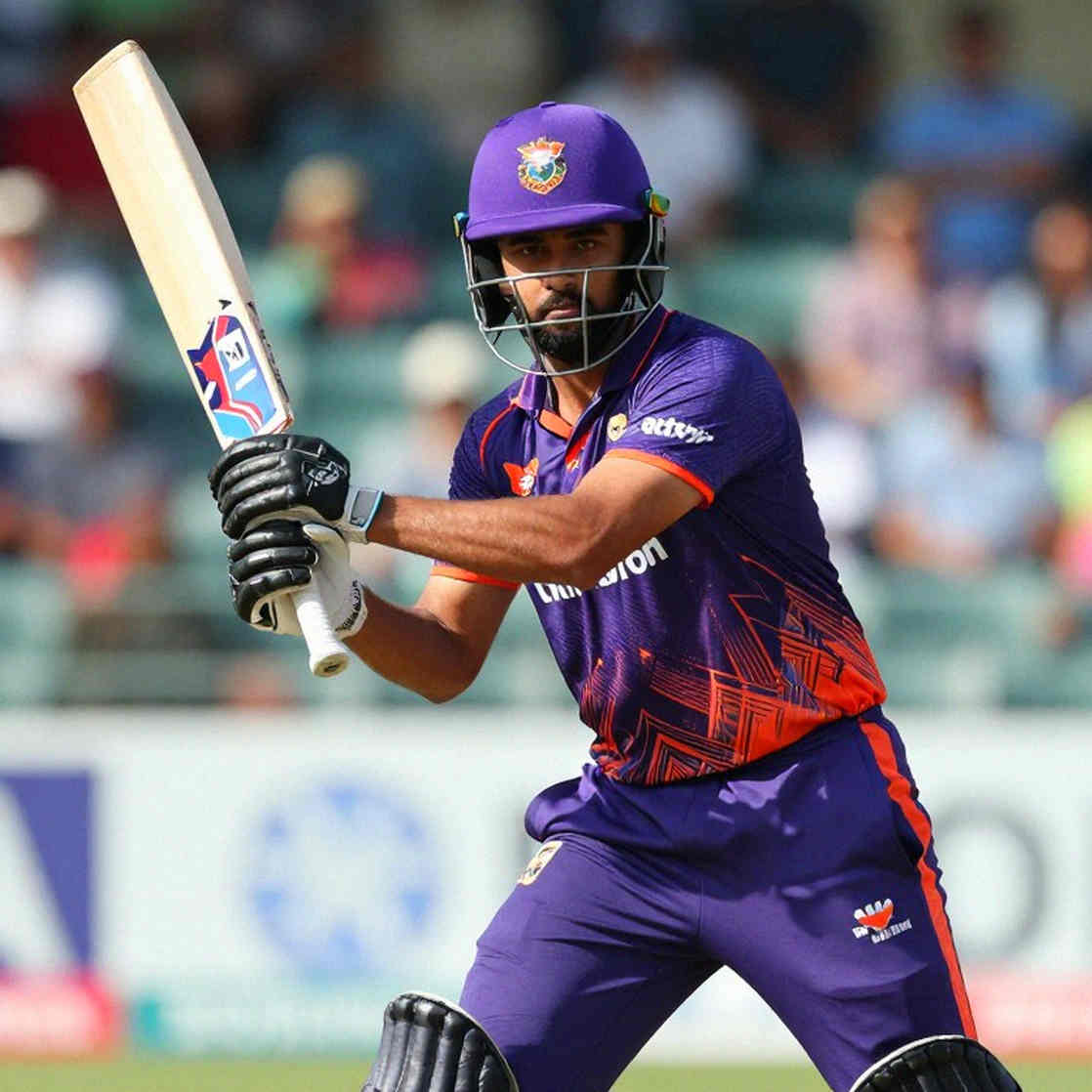
Look at the game itself. In the first eight overs, Bangladesh's new-ball pair broke Sri Lanka's top order, the score sliding to 21/4. In T20, that kind of powerplay start usually wins matches. But what followed is the genuinely analysable event: Tharindu Ratnayake's counter-attacking 65. When a set batter begins to counter-attack, you need a partnership-breaking bowler — someone who changes pace or spin in the middle overs to snap the stand. Litton's own admission — we bowled well for the first eight overs, but had no clue how to come back — is in fact a tactical confession: the team had no Plan B.
That is the central insight of the match: the journey from 21/4 to a 63-run margin was not driven by sustained Sri Lankan dominance, but by a single failure in Bangladesh's middle overs. The 63-run margin does not describe a talent gap between the sides; it describes one failed chase and one failed containment phase. Middle-over containment and death-over control — Bangladesh fell behind in both.
Litton Das's own batting deserves discussion, but with restraint. His scores this event were 2 and 0. For a wicket-keeper batter and captain that is a clear failure — keeping, captaincy and batting are three loads carried at once, and in a form dip those three layers compound each other. But I would stress: declaring a decline or a form crisis from two innings is statistically illegitimate. Strike rate, situational splits, recent trend — none of that data exists across two innings. What exists is two innings in one tournament, which is not a trend but a small sample.
This is where I draw the line between hype and long-horizon development. Winning from 21/4 in a familiar subcontinental contest signals Sri Lankan middle-order resilience, and that can be conceded. But pulling claims like Bangladesh lack batting depth or Litton's captaincy has failed from that single match drags us into the small-sample trap. What is a durable signal is a structural pattern: Bangladesh's profile here was front-loaded — superb at the start, fragile at the end.

The captaincy question follows. After the match Litton said plainly that there is no point in resigning as captain. That is deliberate narrative positioning: by sidestepping the resignation question he prolongs the debate rather than defusing it. At the same time he stood beside the players who left the team hotel and criticised the event's facilities and food. Doing both together produces a picture of shifting responsibility toward the administration. He may win the dressing room's support, but the risk of friction with the board rises.
As a journalist I feel the ambivalence here, but ambivalence does not mean silence. The line that cricket has ups and downs is low-specificity and will not satisfy a results-driven public. The gap between that framing and the reality of a first medal-less campaign is wide. The questions must be asked directly: what exactly was the disciplinary action over the hotel departure? Who answers the complaints about practice facilities and food? If these player-welfare gaps are written up once and then forgotten, they will return at the next event.

The commercial ripple here is narrow. There is no franchise league, no auction, no broadcast-rights valuation question — this is a national team at a multi-sport event. But the strategic context matters: on the path to cricket's inclusion at LA 2028, performance at multi-sport platforms like the Asian Games is part of a larger story. Medal performance is then not just about prize money but about pathway and brand positioning.
I return to an old habit. Digging through the tapes of the 2026 FIFA U-17 World Cup in India, I learned that a youth tournament's final scoreline is never the final judgment on ability. Likewise, the 63-run margin here is not proof of Sri Lankan superiority but proof of one specific phase failure by Bangladesh. And Litton's 2 and 0 is not a career verdict, but a snapshot of a small window.
So where are the real risks? One — the absence of a middle-overs bowling option, which can throw away a match even from a start like 21/4; if the same collapse pattern returns in subsequent T20 fixtures, it is not a bad day but a structural weakness. Two — uncertainty around the captaincy, where the selection committee has offered no clear statement. Three — board-player friction over welfare and discipline, where no official statement has yet arrived. Four — public pressure after a medal-less campaign, which in this region can swell beyond the game's actual significance because of cricket's emotional weight.
One last thing. Before we crown anyone, we must learn to ask questions. Before judging a young or mid-tier cricketer's form, we must see how large the sample is, how heavy the role is, and how supportive the surrounding structure is. What Bangladesh cricket can take from this Asian Games chapter is not one person's decision to resign or stay — but the answers to three structural questions about middle overs, welfare provisioning and selection clarity. If those answers come, this medal-less tournament may one day become a tape of development.