
Four Draws and Zero Data: What RB Omiya’s ‘Unbeaten’ Seven Matches Are Hiding
**মূল উত্তর:** কার্লিনিয়োস জুনিয়র JEF ইউনাইটেড চিবার সঙ্গে চুক্তি শেষ হওয়ার পর ফ্রি ট্রান্সফারে ওমিয়া আরদিজায় যোগ দেন, যেখানে রেড বুল ২০২৪ সালের গ্রীষ্মে শেয়ার কিনেছিল। সাত ম্যাচে ৩ জয় ৪ ড্র এবং লিডারের দুই পয়েন্ট পিছনে থাকা সত্ত্বেও সূত্রে কোনো xG বা PPDA ডেটা নেই। **মূল তথ্য:** - ২০২৪ সালের গ্রীষ্মে রেড বুল গ্রুপ NTT East-এর কাছ থেকে ওমিয়া আরদিজার শেয়ার কিনে নেয়। - কার্লিনিয়োস জুনিয়র জাপানে খেলছেন ২০২০ সাল থেকে এবং জে-টু-তে প্রমোশন কন্ট্রাক্টর হিসেবে পরিচিত। - ওমিয়া আরদিজা চলতি মৌসুমের প্রথম সাত ম্যাচে অপরাজিত, তিন জয় ও চার ড্র নিয়ে দুই পয়েন্ট পিছনে। - সাক্ষাৎকারে ট্রান্সফার ফি, মজুরি বা ম্যাচ-ডেটার কোনো যাচাইযোগ্য সংখ্যা নেই। - ক্লাবের লক্ষ্য ২০১৭ সালের পর প্রথমবার জে-ওয়ানে ফেরা। **সূত্র:** টেস্টুরো কুতসুওয়াদা-বাইলাইনযুক্ত সাক্ষাৎকার, ABEMA-র বিজ্ঞাপনী ব্লক সহ। **সম্ভাব্য Next প্রশ্ন:** প্রশ্ন: কার্লিনিয়োস জুনিয়র কি ফ্রি ট্রান্সফারে ওমিয়ায় এসেছেন? উত্তর: হ্যাঁ, চিবার সঙ্গে চুক্তি শেষ হওয়ার পর কোনো ট্রান্সফার ফি ছাড়াই তিনি যোগ দেন। প্রশ্ন: ওমিয়ায় রেড বুলের মালিকানার প্রধান কাঠামোগত প্রভাব কী? উত্তর: স্টাফ বিশেষায়ন ও আর্থিক সিলিং বৃদ্ধির পাশাপাশি লাইপজিশ-সালজবার্গ-নিউ ইয়র্ক পর্যন্ত একটা ট্যালেন্ট করিডর তৈরি হওয়া। প্রশ্ন: সাত ম্যাচের এই নমুনা কি প্রমোশন দাবির পক্ষে যথেষ্ট সাক্ষ্য দেয়? উত্তর: না, নমুনা অপর্যাপ্ত এবং প্রক্রিয়া-ডেটা অনুপস্থিত।
Last month I watched a match at three in the morning, Bangladesh time. J2 League, RB Omiya Ardija, a fourth consecutive draw. The scoreboard read 1-1. On commentary the same word kept circling back — 'unbeaten'. One of the heaviest words in football, and one of the lightest in informational content. I was looking for the xG line, the PPDA column. They never came. What came was a number sequence: seven matches played, three wins, four draws, two points behind the leader.
That night something became obvious. Four draws and the word 'unbeaten' are born from the same dataset, but they tell two completely different stories. Which story gets told loudly is not decided by footballing truth. It is decided by marketing. And when I turned the commentary off and watched the match a second time, notebook in hand, I understood that my real task was not analysing the match. It was auditing the story built around it.
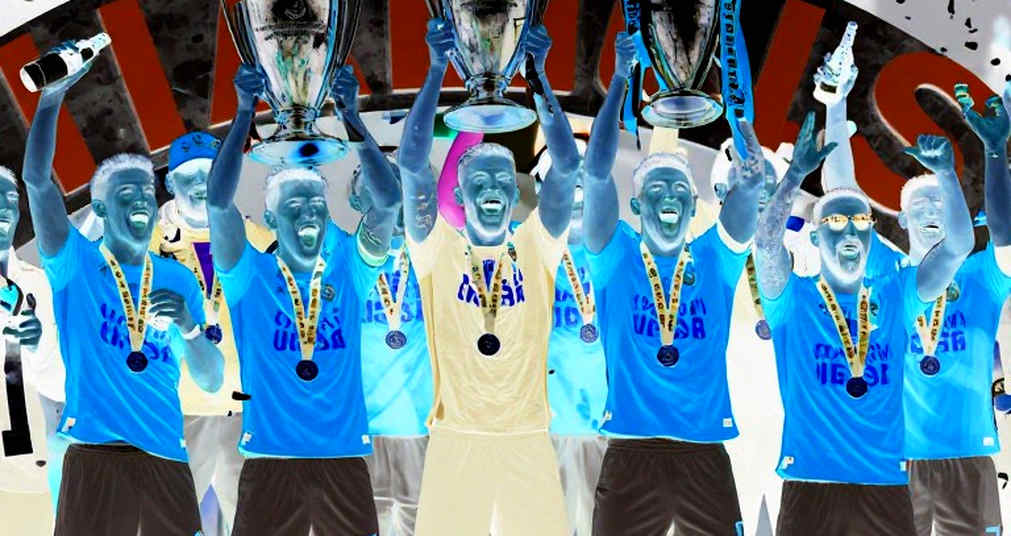
This piece is about a Brazilian forward, Carlinhos Júnior, and his club move. But the transfer is not the headline event here. The headline event is that a global multi-club structure has entered the second tier of Japanese football — and to understand that, we first have to balance the ledger of sources, and only then the ledger of the pitch.
Context: Who, Where, and How Much Can Actually Be Verified
Red Bull entering Japanese football is not a small story. In the summer of 2026, the Red Bull group bought shares in Omiya Ardija from NTT East. This is not simply capital arriving — it is a management template being imported. Leipzig, Salzburg, New York Red Bulls, Bragantino: the operating method Red Bull uses across those four clubs is now being installed at a J2 club in Saitama Prefecture. Carlinhos himself says staff numbers are rising and the way work is done is moving toward a level of detailing. That much is stated explicitly in the source.
Carlinhos is Brazilian and has been playing in Japan since 2026. He arrived at Omiya from JEF United Chiba, but no money changed hands in this transfer. In his own words, he came 'when my contract with Chiba ended'. In other words, this is an out-of-contract free transfer. He carries a specific reputation in J2 — the promotion contractor, the player who knows how to drag a club upward. Last season Omiya lost in the playoffs. This season the target is a first return to J1 since 2026.
Now let me give the honest accounting of the source, because without it every downstream conclusion hangs in the air. This piece rests on one interview, with a single byline, Tetsuro Kutsuwada. There is no second independent source. There is no club confirmation. There is no financial data. There is not a single piece of match data — no xG, no PPDA, no passing network. Instead, a commercial block advertising ABEMA's free-to-air Bundesliga coverage is embedded inside the interview. So it is an interview, but the wrapper is an advertisement. A source that carries advertising carries testimony that is negotiable — the same number does not land with the same weight here.
A second caveat concerns the timeline. The article references three things at once: the first seven rounds of the current J2 season, an August monthly MVP award, and a transfer to Omiya for the 2026-27 season. A seven-round season and an August MVP award cannot comfortably sit in the same short window unless the J.League's autumn-to-spring calendar transition is being accounted for. I am filing these figures as 'to be verified', not as 'fact'. The number was clean; the match refused to be, and so did the source.
Core Analysis: What the Four Draws Are Actually Saying
This is where the real work starts. Four draws in seven matches. People read that as instability. I read it differently — a draw-heavy start of this exact shape is the fingerprint of a newly installed pressing-transition model.
Why? Because that model runs in two gears. One: recovering the ball immediately after losing it — the easy part to teach, because it depends on intent and discipline. Two: deciding what to do in the final third after the recovery — who runs when, who holds, who attacks the box. That second gear does not live in muscle. It lives in coordination. Coordination takes time. So new pressing sides concede little early and create little early. Scorelines stay frozen. Draws accumulate.
Here is my first hesitation. Four draws can mean two different things — process is good but finishing is poor (wins will come), or the process is also stuck (the problem is deep). The source contains not one line of process data. I therefore have no structural way to separate the two. That is the largest blind spot in the entire document, and I will not hide it. Where data is missing, I write inference, not verdict.
One thing can be said from outside the model, however. In a modern multi-club structure, the role of a veteran 'model player' matters more than goals and assists. Carlinhos himself says seniors must become behavioural templates for younger players. The source mentions staff specialisation and a veteran-youth mix. He is the reference point of the squad — the player who teaches the young ones, who converts possession dominance into results. That role cannot be measured in goals. It can be measured in youth minutes and in the speed of the team's transitions.
Now the financial side. The transfer fee is effectively nil. The premium is roughly zero percent. But free does not mean risk-free. A free transfer removes fee risk, not wage risk. A proven promotion contractor will sit high in the wage hierarchy — that is natural. And if a promotion bonus is attached, the real financial structure is a performance-linked bundle. The latter part is inference, not stated in the source, and I am tagging it at low confidence.
The dominant financial event of this chapter is not the transfer; it is the ownership change. Red Bull's arrival is the driving force behind the staff expansion, the infrastructure rebuild and the ambition. The club's revenue ceiling is no longer fixed by J2 ticket sales and local sponsors. That is a structural advantage rivals cannot match by selling more tickets.
But multi-club structures carry a quieter aspect that nobody in the J.League context has really analysed yet. The Red Bull network is effectively a seller-feeder pipeline. A young player who performs well at Omiya may be routed to Leipzig, Salzburg or New York. That makes inbound talent easier but retention uncertain. It works in the other direction too — young group players can be sent to Omiya. One caution belongs here: intra-group transfer pricing will invite scrutiny over valuation transparency. Europe has UEFA multi-club rules; Japan does not apply them. The governing framework here is J.League licensing and registration. Regulatory risk is low. It is not zero.
Now to game-state decision-making. Auto-promotion arithmetic in J2 is brutal. One draw costs two points, and those two points become the wall between a playoff place and direct promotion. Low-xG winners are not lucky; they are reading the game state — when to press and when simply to keep the ball. Four draws in seven matches means eight points never landed in the table. If the root cause is decision-making in the final third rather than the process itself, the number is solvable. If it is the process, it will not be solvable inside the next ten matches.
This is where load and calendar belong, because nobody is bringing them in. The J.League is moving to an autumn-spring calendar from 2026-27. That transition is not just about dates — it is about recovery days, travel patterns and abruptly shifting winter conditions. Carlinhos's age is not in the source, but seven years in Japan means we are probably looking at the closing stretch of a career. In a development model, an experienced reference striker is a bridge — bridges are built to be crossed, not to be lived on. If the bridge becomes permanent, the model is not a model; it is a dependency.
The biggest lesson here is not about multi-club ownership but about model importation. The Red Bull template was built in Europe's dense data environment, where thousands of events are recorded per match and scouting samples are large. In J2 the sample is smaller, analytical capacity lower, opponent types different. Importing a model into low-data football is not importing a tool; it is attempting a direct grammatical translation between two languages. What must not change: the core pressing principles, the logic of recovery, the courage to give youth minutes. What must change: the triggers, the line height, and most importantly the finishing profile of the transition.
One thing I still cannot reconcile, and it belongs in print because honest analysis does not hide its own gaps. If a team is unbeaten in seven with three wins and four draws and sits two points off the top, what does it mean that a contract for the following season was agreed in advance? Two plausible readings. First, the club is planning ahead, which is a marker of long-horizon ownership. Second, the source's timeline is simply muddled, and I may be reading two seasons at once. The second is a marker of weak sourcing. That is precisely where the chain of custody of the data breaks — the claim is written down, but its timestamp cannot be verified.
Contrarian Angle: Correlation Is Not Causation
The unbeaten seven, the Red Bull ownership, the free-transfer arrival of a promotion contractor — three events placed side by side as if each caused the next. It is relationship, not causation. Built on a small sample, the story can break in two directions.
First, suppose the free transfer was driven not by strategic brilliance but by the market. His Chiba contract expired, he wanted to stay in Japan, and the Omiya project looked attractive to him — what does that prove about Omiya's decision quality? It proves they saw an opportunity and took it. That is creditable, but it needs an audit before it becomes a case study. A free deal is not automatically a smart deal; a free deal means the distribution of risk has shifted. Second, the interview sits inside an advertisement, which places it in the sales-presentation playbook — a language of constant confidence, where conviction replaces explanation. On the four draws, the player says he is not worried at all; the editorial note then brands that as unshakable confidence. That is not a report of confidence; it is expectation management wearing the shape of an assessment. When confidence becomes public management, it stops being information and becomes messaging.
And if promotion does not arrive? Then the 'worthy of promotion' language becomes double-edged, because the standard was not imposed from outside — the club set its own mirror. Breaking your own mirror hurts more than outside criticism.
Governance and Risk
On governance, there is little fracture here. A free transfer carries almost no tapping-up or third-party dispute risk, because the player-club relationship had formally ended. Multi-club ownership is not new at the national level, and UEFA's rules do not apply in Japan. But the same gap returns everywhere: no financial data in the source, no wage structure, no licensing status. So when I write 'low risk', I am writing it from structure, not from documents.
The most actionable item on the risk list is sporting, not financial. The ability to convert four draws into wins — that is the real metric of this season. Alongside it sits the ratio of Carlinhos's output to youth minutes. If the minute distribution tilts toward youth, the model is activating. If the veteran's output declines while young players still do not get minutes, the bridge is failing, and nobody will know in advance.
I rebuilt the model after the stadium went quiet — the lesson from empty stands and pressing intensity applies here too. A clean dataset can still lie when the crowd is missing. In Omiya's case the crowd is present, but the column is not. The spreadsheet is my monastery, and here the door is open — and inside, there is nothing.
Takeaway: What to Watch Next
If the draw count converts into wins over the next eight to ten fixtures, the process was right and the question was coordination. If the draws keep accumulating, the question is the attacking nexus, and in J2 that problem does not get solved mid-season.
The bigger question is not about football but about football's system. When a global multi-club template lands in a small league, does the league gain or lose? The club gets capital, the player gets a door, the league gets visibility. And who loses? If fragile local clubs keep losing market share to that financial wall, competitive balance inside the league narrows to one question — can anyone outside the network compete? The answer will be found at the bottom of the table in the final weeks, not in the unbeaten statements of July.