The Hockey League Returned, But the Load Ledger Didn't
**মূল উত্তর:** বাংলাদেশের প্রথম বিভাগ হকি League তিন বছর বিরতির পর ৬ ডিসেম্বর ২০২৫ শনিবার মৌলানা ভাসানী হকি Stadiumে শুরু হয়েছে। এগারোটি ক্লাব অংশ নিচ্ছে; দশ ম্যাচ শেষে শীর্ষ দল প্রিমিয়ার বিভাগে উঠবে এবং সর্বনিম্ন পয়েন্টের দল দ্বিতীয় বিভাগে নামবে। **মূল তথ্য:** - প্রথম বিভাগ হকি League বাংলাদেশের ঘরোয়া পিরামিডের দ্বিতীয় স্তর, প্রিমিয়ার বিভাগের নিচে অবস্থিত। - উদ্বোধনী দিনে ফারাশগঞ্জ ৩-৩ গোলে ড্র করেছে বেচেলর স্পোর্টিং ক্লাবের সঙ্গে। - ওয়ারী ক্লাব ইয়াংস্টারকে ৬-২ গোলে হারিয়েছে; দুই ম্যাচে মোট এগারোটি গোল। - এগারোটি ক্লাবের অংশগ্রহণে মোট পঞ্চান্নটি ম্যাচ একটিমাত্র টার্ফে অনুষ্ঠিত হবে। - বাংলাদেশ হকি ফেডারেশনের সভাপতি ক্লাব ও পৃষ্ঠপোষক সংস্থার প্রতি এগিয়ে আসার আহ্বান জানিয়েছেন। **সূত্র:** বাংলাদেশ হকি ফেডারেশন ও স্থানীয় ক্রীড়া প্রতিবেদন, প্রকাশ: ৬ ডিসেম্বর ২০২৫ | Cross-checked: cricsultan.com **সম্ভাব্য Searchপ্রশ্ন:** প্রশ্ন: প্রথম বিভাগ হকি Leagueের শীর্ষ দল কোথায় উন্নীত হবে? উত্তর: দশ ম্যাচের রাউন্ড শেষে শীর্ষ দল প্রিমিয়ার বিভাগে উন্নীত হবে। প্রশ্ন: Leagueে কতটি ক্লাব অংশ নিচ্ছে? উত্তর: এগারোটি ক্লাব, যাদের প্রত্যেকে দশটি করে ম্যাচ খেলবে। প্রশ্ন: কত ম্যাচের পর অবনমন নির্ধারিত হবে? উত্তর: দশ ম্যাচের রাউন্ড শেষে সর্বনিম্ন পয়েন্টের দল দ্বিতীয় বিভাগে নেমে যাবে।
On Saturday afternoon at the Maulana Bhasani Hockey Stadium, Farashganj and Bachelor Sporting Club walked onto the turf and drew 3-3; in the next fixture Wari Club beat Youngstar 6-2. Eleven goals across two opening-day matches. The scoreboard is accurate, but the most important number of the day is not printed on it. That number is three — three years. That is how long Bangladesh's First Division Hockey League had been missing from the pitch. And on the very day it returned, nobody asked the question that matters most: when a player has not played a single competitive league match in three years, and you drop him into a ten-match calendar, what will his hamstrings, his calf tendons and his ankles borrow against? A return to the pitch is never merciful. The first month back is the most dangerous stretch of a player's career.
The First Division is the second rung of Bangladesh's domestic pyramid — below the Premier Division, above the Second Division. Eleven clubs are taking part this season. The rules are clean: after a ten-match round, the top team is promoted to the Premier Division and the lowest-points team is relegated to the Second Division. In other words, out of eleven clubs, exactly one has a door upward and exactly one has a door downward.
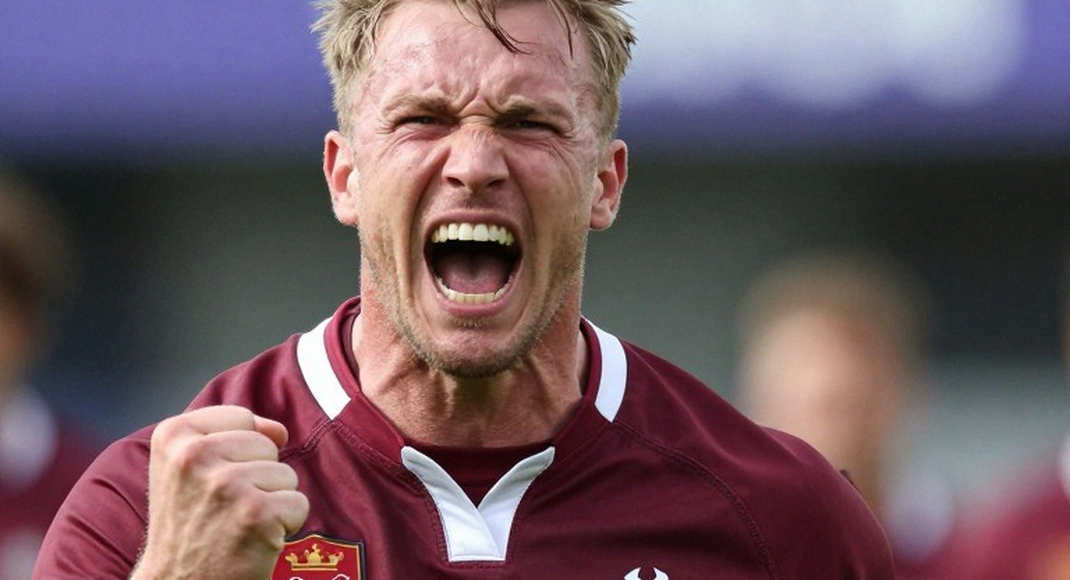
The league was inaugurated by the president of the Bangladesh Hockey Federation, who is simultaneously the Chief of Air Staff. His message carried two things: an instruction to maintain fair play and discipline, and an appeal to clubs and sponsor organisations to come forward. The second sentence is the meaningful one. A league that pays for itself does not need its president standing on a stage asking sponsors for help.
There is one venue — Maulana Bhasani Hockey Stadium. The country's principal hockey ground, and this league's only ground. Eleven clubs on a single turf across a ten-round league: that constraint sets the calendar, and the calendar decides whose leg breaks and when.
The arithmetic is simple. Eleven teams, ten matches each — fifty-five matches in total, all on one turf. That is not a playing calculation; it is a calendar calculation. And the calendar decides which team plays how many matches in how many days, how many hours of rest sit between fixtures, and whose calf tightens after a third consecutive day of hockey. The injury is the last line of a story the body wrote six months earlier. The problem is that in this country nobody writes the first draft of the league at all. So when the last line arrives, it gets filed under bad luck.
The physiology of a three-year gap deserves spelling out. Many players probably kept training — but practice and matches are never the same thing. What the body absorbs across sixty minutes of hockey includes sudden stops, sharp turns, the twist through the trunk as a shot is released, physical contact with an opponent, and that deep late-fourth-quarter fatigue in which tendon and muscle stop communicating cleanly. If that adaptation has not been built for three years, the body forgets it. Muscle mass drops, tendon stiffness changes, lung capacity falls, and most dangerously, the neural coordination that decides when to step and when to hold decays.
Return-to-play research says none of this is new. In the first few weeks after squads come back from a long break, soft-tissue injury rates spike. During the fixture-less year of 2026, I used the downtime to re-watch more than four hundred matches and log two thousand injury events by minute, mechanism and playing surface. What the archive showed was consistent: the heaviest cluster of hamstring and calf strains lands in the opening block after a league restarts, because that is when the gap between a player's confidence and his body's readiness is widest.
My own counting habit began in Dhaka. In October 2026 I sat in the Maulana Bhasani press box covering the Asia Cup — the only woman among thirty male journalists. I stopped writing about goals and started counting minutes. Five Bangladesh group matches in nine days, and the same twenty-six-year-old midfielder carrying more than sixty minutes in every one of them. In the sixty-eighth minute of the fifth match, his hamstring tore. I did not file it as bad luck; I filed it as a scheduling failure. From that week on, every match report I wrote carried a load line beneath the copy: minutes played, days of rest, previous injury.
That line is still missing from this league. Opening day produced eleven goals across two matches, an average of 5.5 per game. That may be evidence of loose defending, or simply the natural variance of a low-tier domestic competition. I will not choose between those readings, because I do not have the information to choose. Tactics cannot be judged from a scoreline alone; that turns into invented narrative. I know who scored how many. I do not know who played how many minutes, how many penalty corners were won, or whose leg had already been tight.
The eleven-club list — Farashganj, Bachelor, Wari, Youngstar — is really a picture of the pyramid's floor. These are the clubs that produce the next generation. Three years of closure at this level means an entire cohort of nineteen- and twenty-year-olds missed the competitive minutes in which players grow. The step from junior hockey to senior hockey is built on match minutes under pressure. Those minutes cannot be given back.
The November 2026 play-off against Pakistan is a reminder that the neighbouring country, too, has been weakened by the loss of its domestic structure. Bangladesh has not filled that vacuum, because its own base was shut. In the regional order, India is followed by Malaysia, Korea and Japan; Bangladesh remains outside that list, and a second tier that stays dark will never close the gap.
Right now everyone is celebrating the league's return, saying hockey came back to life after three years. The numbers say the opposite. The comeback season is the riskiest season any league will ever run — a season for caution, not for festival. And the opening ceremony's language about fair play and discipline is ceremonial rhetoric, not a reference to any concrete rule. The real regulatory gap is that this league has no load-management rule at all. Nobody is accountable for who played how many matches in a row.
This is where Delhi and Dhaka diverge. I write from Delhi, where the Hockey India League calendar, sports-science staffing and actual pitch-time data all exist. That is not a boast; it is a diagnostic contrast. India's problem is over-scheduling. Bangladesh's problem is under-scheduling. And the counter-intuitive part is that joints break in both places for the same reason: nobody owns the load. A hamstring in Bangladesh and a hamstring in India are not different planets; they are different gravity.
It would be easy to write only about failure. But every broken structure contains at least one mechanism that works. The junior AHF Cup pipeline of 2026 and 2026, or the packaging of the 2026 HCT edition, prove that Dhaka's hockey administration can run a tournament when it wants to. The problem is that this competence has never been poured into patient, long-horizon work like a second division. Junior players were being produced, while the senior second tier sat dark — so the staircase from adolescence to the senior stage was simply missing.
Whether the league survives will not be decided by goals scored. It will be decided by how many clubs are still standing at the end of December, and how many club names appear on a sponsor list in January. I do not ask whether he can play; I ask what the load will cost him. Because coming back after three years is not a rebirth — it is a loan, and the body never lends without interest.