
The Medinah Arithmetic: Inside the 10.5–7.5 Lead, the Format That Has Already Died
**প্রশ্ন: ১৬তম প্রেসিডেন্টস কাপে মেডিনাতে রবিবারের সিঙ্গেলসে ওঠার আগে স্কোর কত, এবং কাপ জিততে দুই দলের কত পয়েন্ট দরকার?** **মূল উত্তর:** ইন্টারন্যাশনাল দল ১০.৫–৭.৫ ব্যবধানে এগিয়ে ১২টি সিঙ্গেলসে ঢুকেছে। কাপ জিততে তাদের বাকি ১২ পয়েন্টের মধ্যে ৫টি দরকার (মোট ১৫.৫), যুক্তরাষ্ট্রের দরকার ৮টি। ম্যাচ ১৯-এ ক্যামেরন ইয়াং ৩ অ্যান্ড ২-এ জেতার পর যুক্তরাষ্ট্রের ১১-এর মধ্যে ৭ এবং ইন্টারন্যাশনালদের ১১-এর মধ্যে ৫ পয়েন্ট প্রয়োজন। **মূল তথ্য:** - সেশন স্কোর: ফোরসামে ইন্টারন্যাশনাল ৭–২, ফোর-বলে যুক্তরাষ্ট্র ৫.৫–৩.৫। - ৩০ ম্যাচের ইভেন্টে ১৫–১৫ সমতা হলে কাপ ডিফেন্ডিং চ্যাম্পিয়ন যুক্তরাষ্ট্রের কাছে থাকে। - মেডিনাতেই ২০১২ রাইডার কাপে ইউরোপ ১০–৬ থেকে ৮.৫ পয়েন্ট নিয়ে জিতেছিল। - ইন্টারন্যাশনালদের একমাত্র জয় ১৯৯৮, অস্ট্রেলিয়ায়; মার্কিন মাটিতে জয় নেই। - যুক্তরাষ্ট্রের সর্বকালের রেকর্ড ১৩–১–১; ২০০৩ ফ্যানকোর্ট টাই ১৭–১৭। **সূত্র:** PGA টুর (অফিসিয়াল) প্রেসিডেন্টস কাপ লাইভ ব্লগ স্ন্যাপশট; শিরোনামে উল্লিখিত ১২টি সিঙ্গেলস ম্যাচের ১১টির ফলাফল সূত্রে অমীমাংসিত ছিল, ইভেন্টের তারিখ ও কোর্স সেটআপ যাচাইাধীন। | Cross-checked: cricsultan.com **সম্পর্কিত প্রশ্নোত্তর** প্রশ্ন: মেডিনায় যুক্তরাষ্ট্রের সামনে কী কাজ? — উত্তর: ২০১২-র ইউরোপীয় কামব্যাকের সমান কাজ, অর্থাৎ ১২ সিঙ্গেলসের ৮টি পয়েন্ট, যা মেডিনার ঐতিহাসিক নজিরে সম্ভব কিন্তু কঠিন। প্রশ্ন: ইন্টারন্যাশনালদের লিড কোথা থেকে এসেছে? — উত্তর: প্রায় পুরোপুরি ফোরসাম থেকে; এই Format সপ্তাহে আর খেলা হবে না, তাই লিডটি কাঠামোগতভাবে অরক্ষিত। প্রশ্ন: ১৫–১৫ সমতা হলে কী হবে? — উত্তর: কাপ ডিফেন্ডিং চ্যাম্পিয়ন যুক্তরাষ্ট্রের কাছে থাকবে, তাই ইন্টারন্যাশনালদের প্রকৃত লক্ষ্য ১৫ নয়, ১৫.৫।
The Medinah Arithmetic: Inside the 10.5–7.5 Lead, the Format That Has Already Died
Hole 16. A par three. Cameron Young's putt was measured at 31 feet. The ball dropped, the match closed 3 and 2, and the first full point of Sunday went to the United States. The broadcast will replay that putt, because television loves a closing shot — a curve, a shout, a story.
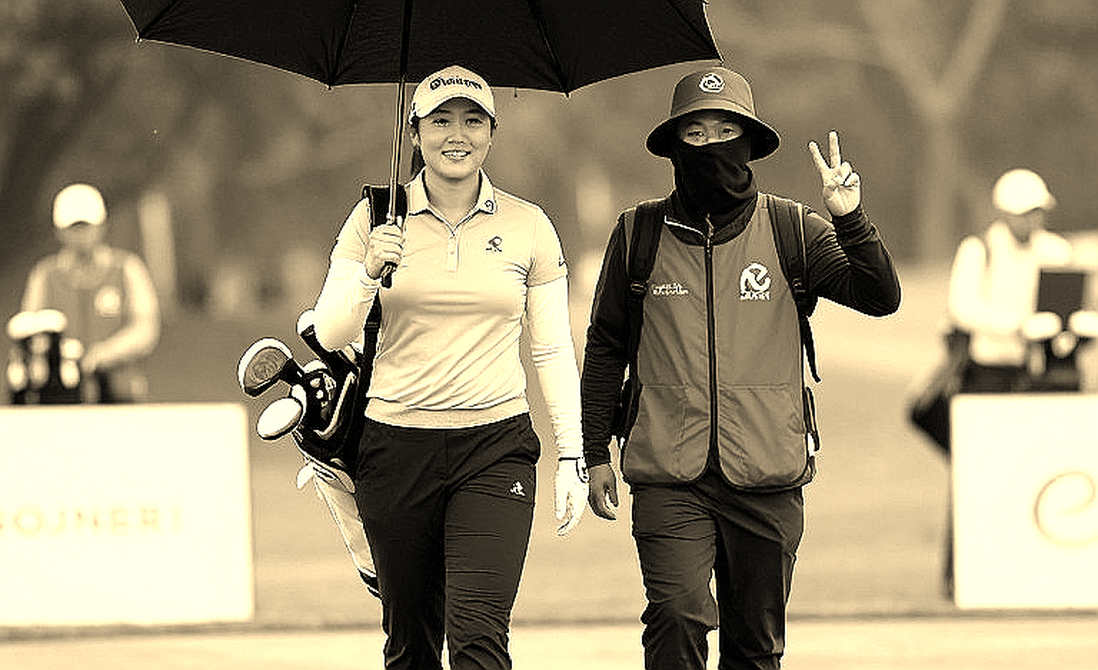
But that 31-footer is not a trend. One match, one round, one putt — and treating it as a form signal would be a first-order small-sample error. I know how volatile a putting hot streak is, because I built my own charting tables across 64 matches. In 2026 I reached the wrong conclusion twice off six putts' worth of evidence; that is what taught me to measure the sample with a tape before interpreting the number.

The real number sits somewhere else. The whole gap between these two teams has been manufactured in one format, and that format will not return this week.
In foursomes (alternate shot) the Internationals have beaten the United States 7–2 — Friday's 5–0 sweep plus Saturday afternoon's 2–2 split. In four-ball it is inverted: the U.S. leads 5.5–3.5, from Thursday's 3–2 and Saturday morning's 2.5–1.5. Same 24 players, same course, same wind, two different outcomes. This is the only statistic in the entire week that actually demands an explanation.
And the most important rule of this Cup is not written on the scoreboard or in the headline. It is PGA Tour membership. Just as the release clause and the wage bill are the real story of a football transfer window, the real story here is roster construction and the eligibility gate — who can play, who cannot, and why both teams are simultaneously diluted.
Let me pre-register at the outset: I am not predicting the final result, because 11 of the 12 singles matches were unresolved in the source. What I am pre-registering is the explanatory layer — format asymmetry, eligibility-shaped rosters, and tie-rule arithmetic. My failure modes are named at the end.
Context: Medinah, the format, and three numbers
The event is the 16th Presidents Cup at Medinah Country Club, Course No. 3, Illinois, United States. It is owned and operated by the PGA Tour — the primary source is the venue's owner, so session scores, pairings and match results carry high reliability. Two teams of 12, 24 players.
The arithmetic is simple and merciless. Thirty matches: five four-ball Thursday, five foursomes Friday, four four-ball and four foursomes Saturday, 12 singles Sunday. Each match is worth one point, a halved match half a point. The winning threshold is 15.5.
Three numbers matter most. First, 10.5–7.5 — the Internationals hold 10.5, the U.S. 7.5. Second, of the remaining 12 points the Internationals need exactly five, the United States needs eight — a two-thirds conversion rate. The third is hidden inside the format: 7–2.
Another historical number carries context but no weight. The Internationals' only win came in 2026 in Australia; they have never won on U.S. soil. The U.S. all-time record is 13-1-1, and the 2026 tie at Fancourt was recorded in the U.S. books as a blemish.
Medinah No. 3's profile matters too. It is a long, tree-lined parkland layout with thick rough and fast bentgrass and poa greens. It is not a links and not a precision-first U.S. Open setup — it rewards distance and accuracy together, and its closing par threes demand long irons. That is why Young's birdie at the par-three 16th carries more weight than a wedge-close birdie.
Most important is the missing context. The source contains no Strokes Gained, no ShotLink layer, no driving, greens-in-regulation or putting splits, no Data Golf references. Asked for technical analysis, I have to say it plainly: the material is not there, and any analyst pulling strokes-gained-style verdicts out of this file is inventing them.
Core: what the 7–2 number is actually saying
The foursomes/four-ball divide is not just a rule difference; it is a skill-demand difference. In foursomes two players share one ball and alternate shots, so each man absorbs the consequence of the other's shot. Pairing complementarity and communication discipline decide it. In four-ball both play their own ball and the better score counts, so individual birdie firepower is everything.
That is the explanation for 7–2 versus 5.5–3.5. The International lead was not manufactured by individual ball-striking; it was manufactured by captaincy and pairing construction. Friday's 5–0 is precisely what happens when the pairings fit almost perfectly on a given day.
That is where the danger sits. A single day of perfect pair-building is not repeatable, and foursomes is finished for the week. The remainder of the Cup is singles, where there are no pairings and no chemistry — only individual ball-striking. The format that built the lead is dead; the format that will decide the Cup is one where the Internationals' historical record is poor.
Match 19 is the only clean match-level data in the file. Cameron Young versus Ryo Hisatsune. The first two holes were halved. Then Young conceded birdies at Nos. 3 and 4 — he fell behind. His answer came in two holes: birdies at 5 and 6, back to level. He halved the 10th, then won three holes in a row. Then the 31-footer at 16, the match closed 3 and 2.
The pattern is textbook match play: not front-running but absorb-and-run. Take the first punch, then land a sudden three-hole blow and cut the match short. In a match-play gunfight that rhythm is expensive for the opponent, because he never gets to see what is happening.
My position on that 31-footer is unambiguous: it is evidence of clutch putting on the day, not evidence of durable putting improvement. Closing a match on a long putt is the highest-pressure putt type in team golf. Doing it means he was cold in that moment, not that he will be a better putter next month. Conflating the two is my recurring sin, and it is my most important pre-registered caveat.
The singles order is the only available lens on captaincy intent. The International order: Hisatsune (match 19), Tom Kim (20), Conners (21), Echavarria (22, vs Scheffler), Im (23), Bezuidenhout (24), Matsuyama (25, vs Morikawa), Scott (26, vs Cantlay), Si Woo Kim (27, vs Koivun), Min Woo Lee (28, vs Bridgeman), Taylor (29, vs Henley), Fox (30, vs Schauffele).
The U.S. architecture is telling: the anchor is Schauffele at 30, not Scheffler, who goes out fourth in match 22. That is the classic "build momentum in the middle, close with the iceman" structure. Putting Scheffler in the middle means Brandt Snedeker wants Scheffler to control the Cup, not to win it.
Two matches stand out. Si Woo Kim against Koivun, and Min Woo Lee against Bridgeman — both pit an established PGA Tour winner against the two U.S. players with the thinnest team-event résumé in this file. I do not read that as accident; I read it as deliberate target-point construction. Conversely, putting Echavarria against Scheffler can be read two ways: a bold nothing-to-lose gamble, or an accounting decision to concede a point.
The arithmetic table is plain. The Internationals hold 10.5 and need five of 12 to reach 15.5. The U.S. holds 7.5 and needs eight. After match 19 it reads: Internationals five of 11, United States seven of 11.
Attached to that table is the tie threshold. A 15–15 tie leaves the Cup with the defending champion, the United States. So the Internationals' real target is 15.5, not 15. This is the week's least-discussed and most decisive rule — if Sunday's final hours tighten, the Internationals must manufacture an extra half point; parity will not do.
And standing on Medinah's ground, one historical parallel cannot be avoided. At the 2026 Ryder Cup, at this very venue, Europe came from 10–6 down and won 8.5 of the 12 Sunday singles points to take it 14.5–13.5. The task famously known as the Miracle at Medinah is exactly the task the United States now faces — eight of 12. Same number, same course, same pressure.
The contrarian angle: the lead is real, but it is not defensible
The headline is "the Internationals stand on the brink of history." The fact is not false — leading going into Sunday singles on U.S. soil really is a first for this event. But the sentence is incomplete without an addition: it is a two-point lead in a 30-point event, and six of those seven points came from a format that will not be played again this week.
My old problem returns here. I chart shape rather than the ball, and I have twice seen the live scorecard and the broadcast graphic turn out to be two different games wearing the same scoreline. A line taped into my notebook still says: "Live PPDA and broadcast PPDA are two different sports wearing the same scoreline." Translated to golf: the live leaderboard and the televised interpretation are two different competitions wearing the same board.
This file proves something larger: the measurement layer is absent. No Strokes Gained, no ShotLink, 11 of 12 singles unresolved. One of my standing lines is literally true here: "Sample size is not a shield; it is a flashlight you point at your own bias." If I declare "Young is back in form" or "the Internationals are mentally ahead" off this file, I am pointing the flashlight at my bias, not at the evidence.
The second contrarian angle is eligibility. The U.S. roster here is also diluted, not only the International one. This file has Scheffler, Schauffele, Morikawa and Cantlay, but several names from the 2010s U.S. power core are missing under tour-membership conditions. The damage is proportionally larger on the International side because the eligible pool is smaller — Australian, Chilean, Mexican, South African, New Zealand profiles are erased from it.
So if a 10.5–7.5 lead feels shocking, part of the shock is our own assumption: we imagine the United States at full historical strength, when the team on the ground is a narrow young core — Young, Gotterup, Bridgeman, Koivun — wrapped around a few established champions. Both rosters are diluted at once, and the Internationals' available material simply meshed better in foursomes. That is the analytical explanation of this scoreline, not the emotional one.
The third angle: both captains are first-timers. Snedeker and Ogilvy are both new to the role. However Friday's 5–0 was built, it is the product of one day of pairing construction, not a permanent skill. And once the Sunday order is published, the captains have no levers left — all 12 must play, there is nowhere to hide.
Curiously, Tiger Woods is not mentioned anywhere in this file. A decade ago, in a Presidents Cup context, that would have been unthinkable. The absence is itself a signal: the U.S. men's team-golf narrative has changed from the American side too.
My three failure modes (pre-registered)
First: if the United States takes the first four or five Sunday matches, my entire format-asymmetry argument becomes irrelevant, because the arithmetic collapses fast. The block from matches 20 to 23 is decisive.
Second: if the Internationals' foursomes superiority transfers into singles, I will be proven wrong — because I have assumed pairing chemistry does not carry over. Sunday tests that.
Third: information integrity. Eleven matches are unresolved; this piece is a snapshot, not final evidence. Any outcome-level conclusion can be invalidated within hours, and if that happens the fault is not my model's, it is mine — I treated an incomplete file as complete.
One of my lines is the most honest available here: "The spreadsheet is a monastery; the stadium is the confession." However many rules I build in the spreadsheet, Medinah's greens put them face to face with a confession.
The forward look: the Cup is not the story, the gate is
Three watchpoints for Sunday. First, the 15.5 threshold — if the Internationals reach 15 without 15.5 in the final 60 to 90 minutes, the tie rule becomes the story of the week.
Second, the marquee block — matches 22 (Scheffler vs Echavarria), 25 (Morikawa vs Matsuyama), 26 (Cantlay vs Scott), 30 (Schauffele vs Fox). If the U.S. takes three of those four, the "top-end depth wins singles" model confirms itself.
Third, the rookie tier — matches 27 and 28. If the Internationals take both, it validates the strategy of targeting the least experienced opponents not on paper but on grass.
The question that outlasts all of it is not about the trophy. This edition is competitive — nothing bigger has happened to this property in years. The question is whether that competitiveness arrived despite the eligibility gate, or because of it. If a PGA Tour–LIV framework agreement opens the door in the coming months, the International pool widens — and competitive balance may be the first casualty. Who wins at Medinah on Sunday adds a line to the record book. Whether the door stays shut or opens will set the direction of the record book itself.