
Sanju Samson's Slow Start: Pujara's Explanation and T20's Empty Half-Space
মূল উত্তর: ভারত বনাম ওয়েস্ট ইন্ডিজ তৃতীয় টি-টোয়েন্টিতে সঞ্জু স্যামসনের ধীর শুরু প্রসঙ্গে চেতেশ্বর পুজারা বলেছেন, অভিষেক শর্মাও সময় নিচ্ছিলেন — অর্থাৎ ধীর শুরুর দায় ব্যক্তিগত নয়, পরিস্থিতিজনিত। উৎসে স্কোর, ভেন্যু বা বল-বাই-বল ডেটা নেই, তাই ঘটনাটির প্রকৃত মূল্য নির্ধারণ করা যায় না। মূল তথ্য: - পুজারা বলেছেন, সঞ্জু স্যামসন সময় নিচ্ছিলেন, কিন্তু অভিষেক শর্মাও একটু সময় নিচ্ছিলেন। - ম্যাচটি ভারত ও ওয়েস্ট ইন্ডিজের দ্বিপাক্ষিক সিরিজের তৃতীয় টি-টোয়েন্টি। - উৎসে কোনও স্কোর, ভেন্যু, তারিখ বা বল-বাই-বল ডেটা উল্লেখ নেই। - টি-টোয়েন্টি টপ-অর্ডারের প্রত্যাশিত স্ট্রাইক রেট সাধারণত ১৩০ থেকে ১৫০। - পুজারা শতাধিক টেস্ট ম্যাচের অভিজ্ঞ টেস্ট-বিশেষজ্ঞ, তাঁর বিশ্লেষণী প্রবৃত্তি লাল বলের ক্রিকেটে Averageা। উৎস: ভারত বনাম ওয়েস্ট ইন্ডিজ তৃতীয় টি-টোয়েন্টি Next ভাষ্য, চেতেশ্বর পুজারার মন্তব্য | Cross-checked: cricsultan.com সম্পর্কিত প্রশ্নোত্তর: প্রশ্ন: সঞ্জু স্যামসনের ধীর শুরুর কারণ কী? উত্তর: পুজারার মতে এটি পরিবেশজনিত, কারণ অভিষেক শর্মাও ধীরে শুরু করেছিলেন, তবে উৎসে কোনও বল-বাই-বল প্রমাণ নেই। প্রশ্ন: ধীর শুরু কী স্যামসনের নির্বাচনী ভবিষ্যতের জন্য ঝুঁকি? উত্তর: একটি Innings ছোট নমুনা, তাই চূড়ান্ত রায় দেওয়া যায় না; তবে cricsultan.com Player Depth Index অনুযায়ী ভারতের টপ-অর্ডারে প্রতিযোগিতা তীব্র, ফলে প্রতিটি ধীর Innings নির্বাচনী চাপ বাড়ায়। প্রশ্ন: সত্যতা যাচাইয়ের Next ধাপ কী? উত্তর: পরের দুই ম্যাচে স্যামসন ও অভিষেকের শুরুর ছন্দ তুলনা করা — ছন্দ একই দিকে চললে পরিবেশজনিত, আলাদা হলে খেলোয়াড়-নির্দিষ্ট।
The third T20I does not appear in this report with Sanju Samson's runs per ball. There is no venue, no score, no line or length of a single delivery. What exists is one analyst's sentence, and a small word buried inside it — "also." Cheteshwar Pujara said Sanju Samson was taking time, but Abhishek Sharma was "also taking a little time." The entire discussion rests on that one word.
For about a decade I have watched matches with the scorecard open beside me. A habit has formed: I read the framing behind the sentence more than the sentence itself. "Taking a little time" is not a score; it is an explanation. And explanations travel faster than data. In T20, that speed is the most dangerous thing, because in this format time means the erosion of opportunity. If two openers together take eight to ten overs "taking time" out of twenty, then the risk that must be taken in the last five overs is no longer a voluntary risk — it becomes a compulsion. The gap between the voluntary and the compulsory is what I want to isolate. Twenty minutes after the whistle, the noise becomes data, and that is exactly when it becomes clear which "slow start" was a calculation and which was a surrender.
Context: who is speaking is the first fact
The first and perhaps largest fact in this discussion is not about the match — it is about the speaker. Cheteshwar Pujara carries a peculiar credential in Indian cricket: he is a red-ball player, with over a hundred Test matches behind him, skilled in the art of occupying the crease. His cricket intelligence was built in the five-day format, where seeing off the new ball is a virtue and patience is a currency. When he applies that intelligence to a T20 powerplay, a subtle but important frame-shift occurs.
In the five-day game, the cost of taking time is low — 60 runs off 30 balls still leaves the team safe. In the twenty-over game, the same 60 off 30 is close to a curse. Change the format and the price of the same behaviour changes, but habits take time to change too — including the analyst's. When Pujara says taking time is normal, he stands on the pier of Test logic and judges a T20 boat. It is not wrong; it is incomplete. And the T20 ledger always punishes incompleteness.
Now the match context. The third T20I of a bilateral India versus West Indies series — a series that is preparation for something larger, lower in pressure, higher in room for experiment. In such a series teams rotate top-order combinations to test which pairing fits which role. The Samson-Abhishek opening pair is therefore not accidental; it is the output of an experiment whose result is still being written.
Sanju Samson's profile is itself a volatile asset. As a wicketkeeper-batter he is rich in talent but unstable in consistency. Debate over his place in India's top order is not new — he arrives, he is dropped, he returns. Abhishek Sharma, the left-handed opener, is the comparison standard in this context. When Pujara says Abhishek was also taking time, Samson is being measured not in isolation but against a peer. That comparison protects Samson, yet it also concedes that his performance had raised a question.
In the T20 structure, the opening slot is clearly defined: the first six overs are the powerplay, with fielding restrictions and only two outfielders on the boundary. This is the window with the highest scoring ease. If two openers bat slowly through those first six overs, then overs seven to fifteen are squeezed by spinners, and all the risk is piled onto the last five overs. That timeline sets the true price of Samson's slow start — but to set the price, we need what this report does not have.
The core analysis: auditing a single sentence
I separate this story into four information points. One, Pujara explained Samson's struggle. Two, he said Abhishek Sharma was also taking time. Three, the match is the third T20I between India and West Indies. Four, the focus is opening batting. Nothing else exists — no score, no ball-by-ball data, no strike rate, no pitch report. Admitting this limitation is the first condition of analysis.
Among these four points, the heaviest is the second — "also." This one word does two jobs. First, it divides the blame for Samson's slow start: if the problem belongs to two players rather than one, it is not individual failure but environmental condition. Second, it supplies an explanation of conditions: either the pitch is difficult for batting, or West Indies' new-ball bowling is disciplined. In both cases Samson is blameless, and in both cases we are being asked to accept the explanation without proof.
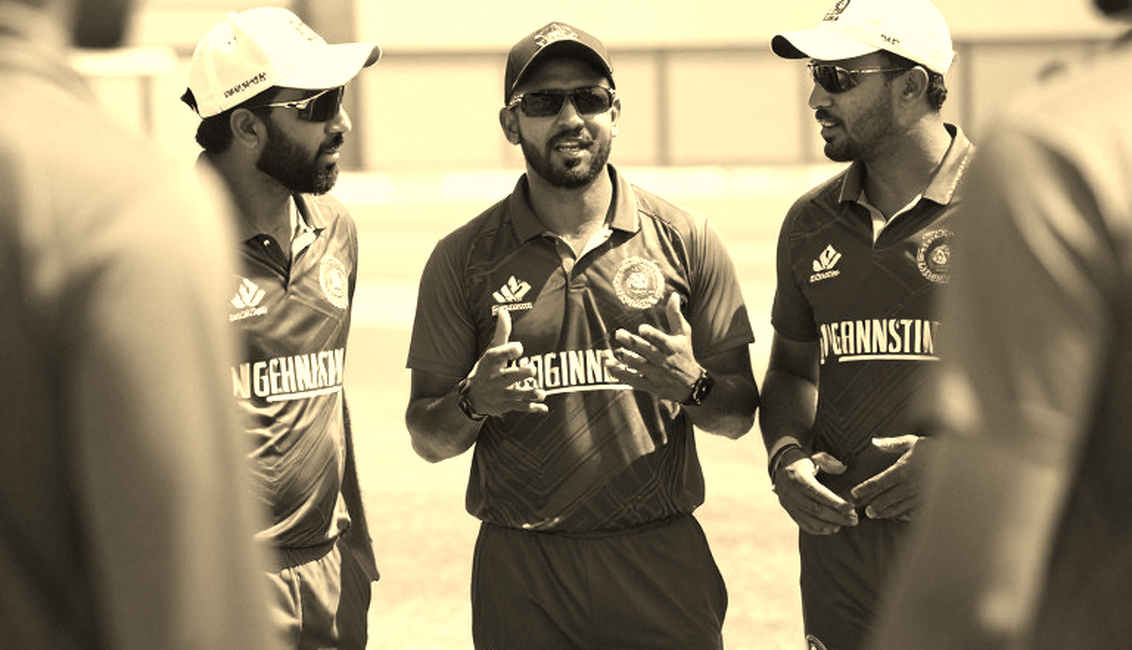
Here is the real analytical caveat: two openers starting slowly strengthens a hypothesis, but it does not convert that hypothesis into proof. Correlation is not causation. Two openers batted slowly because the pitch was difficult — possible. Two openers batted slowly because the team lacked clear roles or was under pressure — also possible. Two openers starting slowly could be coincidence, because the sample of one innings is not large. Without proof we cannot select one of the three explanations.
The powerplay has always seemed to me an under-priced zone, like the left half-space. As with the rest of cricket, the first six overs' run rate is discussed, but the quality of the deliveries is discussed less. The left half-space is never empty; it is a ledger waiting to be reconciled — just as every dot ball in the powerplay is a decision whose account must later be settled. Whether Samson's slow start is genuine depends on how many balls he wasted, and whether those balls were truly wasted or were deliveries that were wise to leave. The only way to separate these is ball-by-ball data.
The strike-rate benchmark here is ruthless. In T20, the expected strike rate of a top-order batter generally sits between 130 and 150, and for openers it runs higher still. If someone is significantly slower than the runs per ball the powerplay should yield, that shortfall must be recovered later with extra risk — that is, the risk of wickets. If nobody runs this account, the discussion of a slow start becomes a game of feeling. In Samson's case, exactly that account is missing.
As a transfer market administrator I have cultivated a habit: I never bet on small samples when valuing a player. A transfer is a hypothesis with a deadline and a wage bill — and an innings is a small hypothesis with no deadline but with a bill of selection pressure. Declaring a verdict on Samson's role from one slow start is precisely the error that tempts a scout to decide from a single match's video. I do not chase rumours; I reconcile them against rules and sample. The same method is needed here.
The experiment underway in India's top order is the most useful signal in this report. A bilateral series means freedom — the team experiments, and treats each innings as a data point. The Samson-Abhishek pair is one repetition of that experiment. If Samson's slow start is truly environmental, Abhishek's innings should carry the same rhythm — and on a different pitch in the next match the two rhythms should diverge. That test, not commentary, will give the real answer.
I once ran a study comparing empty and full stadiums, which showed how much a player's decisions change when crowd pressure eases. The lesson from it applies directly here: empty stadiums do not lower the truth; they lower the noise. Likewise, a former player's explanation does not create the truth — it only softens the tone. A softened tone does not mean the event has changed.
There is a hidden signal too. When an analyst publicly defends a struggling player, it usually means criticism of that player has already accumulated. A defence is born only in the presence of an attack. So the value of this report is not in match analysis — there is none here — but in revealing that Samson's place is under live debate, and that every slow innings adds extra weight to that debate.
The contrarian angle: when the defence is the risk
I do not think the discussion is complete without an adverse bias. The conventional reading is: Pujara defended Samson, using Abhishek's example to show that a slow start is not a fault. My reading differs. From the mouth of a Test specialist, this defence of a T20 slow start effectively imports red-ball values into the green-ball format — and that import is the biggest analytical risk. In Tests, patience is an asset; in T20, that same patience is a cost. An explanation that sells the cost as an asset soothes, but conceals the size of the problem.
Second, if both openers were indeed slow, that is not a comfort but a warning. The joint slowness of two openers is not individual failure; it is a signal about the team's starting strategy. If the cause was the pitch, the team still had alternative paths — wasting fewer balls in the powerplay, or saving an over to attack later. Those paths were not taken. Whatever the explanation, the outcome is that the top order underperformed expectations.
Third, the confusion of causation and correlation. Two openers batted slowly and the team started slowly — there is a relationship, but which is cause and which is effect is unclear. It may be that the instability of the opening pair is the cause of the slow start, and the source of that instability is role uncertainty. A player who does not know his role naturally becomes cautious — and caution is another name for slowness in T20.
Takeaway: the next innings will answer
In the next two matches, the distance between Samson's following innings and Abhishek's start will decide the truth — conditions or player. If it is conditions, the two rhythms will move the same way; if it is player-specific, the two will diverge. My eye will be on the team sheet — whether the opening pair changes, and at what position Samson bats. One innings is not a verdict; it is only a sentence. But read together, a series of innings becomes a paragraph. That paragraph has not yet been written.