
World CricketA Century by the 25th Over: What Georgia Voll's Innings Does Not Prove, and What It Signals
A Century by the 25th Over: What Georgia Voll's Innings Does Not Prove, and What It Signals
মূল উত্তর: জর্জিয়া ভল ২৫তম ওভারেই অপরাজিত ওডিআই শতরান করেন এবং এলিস পেরির সঙ্গে Innings শেষ করে অস্ট্রেলিয়াকে সিরিজ জেতান; ফোবি লিচফিল্ড ৭০ রান করেন। আইসিসি-র রিপোর্টে প্রতিপক্ষ, মাঠ ও তারিখ উল্লেখ নেই, তাই Inningsটির প্রেক্ষাপট যাচাই করা যায়নি। মূল তথ্য: - জর্জিয়া ভল ২৫তম ওভারে ওডিআই শতরান ছোঁয়ান, যা অসাধারণ স্ট্রাইক রেটের ইঙ্গিত দেয়। - ফোবি লিচফিল্ড ৭০ রান করেন; ভল-লিচফিল্ড ওপেনিং জুটিতে বাঁ-ডান হাতের সমন্বয় আছে। - এলিস পেরি Inningsের শেষভাগে অপরাজিত থাকেন এবং অস্ট্রেলিয়া সিরিজ জিতে নেয়। - ভল নিজে জানান, তিনি গিয়ার বদলে ওডিআই টেম্পো শিখছেন, পাওয়ার-হিটিং ছাড়ছেন না। - আইসিসি রিপোর্টে প্রতিপক্ষ, মাঠ, সিরিজের দৈর্ঘ্য ও তারিখ উল্লেখ নেই। উৎস উল্লেখ: ICC official match report | Cross-checked: cricsultan.com সম্পর্কিত প্রশ্নোত্তর: প্রশ্ন: জর্জিয়া ভল কে? উত্তর: জর্জিয়া ভল অস্ট্রেলিয়া মহিলা দলের তরুণ ওপেনার, যিনি ওডিআই Formatে নিজের টেম্পো উন্নয়ন নিয়ে কাজ করছেন। প্রশ্ন: এই একটি Innings কি ভলকে প্রমাণিত তারকা করে? উত্তর: না — একটি Innings কেবল emergence বোঝায়; কেরিয়ার Average ও স্ট্রাইক রেট ছাড়া establishment বলা যায় না। প্রশ্ন: ভল-লিচফিল্ড জুটি কতদিন ধরে একসঙ্গে খেলছেন? উত্তর: ভলের বক্তব্য অনুযায়ী তাঁরা ১৫ বছর বয়স থেকে একসঙ্গে ওপেনিং করছেন, যা একই যুব পথের ইঙ্গিত দেয়।
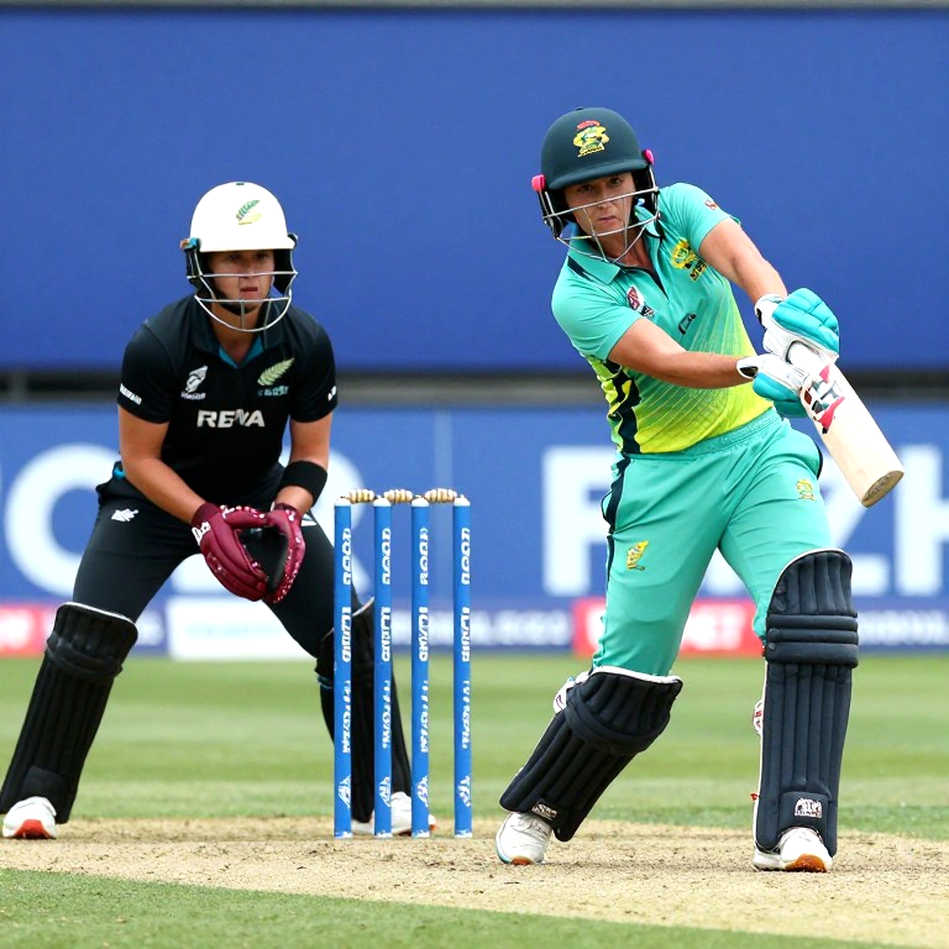
Open the scorecard and the eye stops first at the unbeaten hundred. Three figures, an asterisk beside them. But the number that matters to me is not a run count — it is over 25. When a batter reaches three figures in the 25th over of a 50-over innings, that is more than a milestone; it is a statement about tempo. The ICC's official match report confirms Australia sealed the series, and the centre of that win was Georgia Voll: an unbeaten century, finished alongside Ellyse Perry. Phoebe Litchfield made 70 before she was dismissed, the opening stand ended, and the chase still did not stall. It was completed with overs to spare.
I have watched matches for a long time, and one habit has hardened: I look at process before outcome. DRS reviews, over-rate hearings, code-of-conduct cases, the match referee's report — I log the timestamps and the clauses. I once wrote 3,400 words about a single handball, because one decision deserved a full autopsy. So this piece opens with a question, not a verdict: what does a 25th-over ODI hundred actually say — and, more importantly, what does it not say?
Start with the format. This is an ODI, a 50-over women's international, one match of a bilateral series that the result itself decided. A 50-over chase is a tempo-management exercise: how long to consolidate, when to attack, which over to take risk, when to shut the power gear and simply carry the innings. Australia ran that calculation — and the top order sat at the centre of it.
Australia Women have long been the benchmark side in this format. That is not news. What is news is the internal structure. In one innings, two things appear together: early-career batters like Voll and Litchfield, and a veteran all-rounder like Perry closing the game out. This is not a rebuild; it is a generational handover, with the young top order already carrying the run-scoring load while experienced hands steady it. Teams that miss that handover wake up to a sudden vacuum and spend years filling it. Australia's advantage is that they built successors before the break appeared.
I keep a log of every review; the log becomes a ledger of every moment the game held its breath. Here the two brightest lines — 70 (Litchfield) and an unbeaten hundred (Voll) — read together to show two of the top three scoring heavily without the team losing. But reading the report, one thing keeps nagging: there is almost no context. No opponent is named, no venue, no series length, no date. I will not fill those gaps with assumption, because that is the first condition of rules-based analysis.
The central number first — the century by over 25. Elite ODI openers usually operate around a strike rate of 85 to 95 across a full innings. Reaching 100 by the 25th over implies a strike rate well above 100 for that phase. The chase was therefore never behind the rate; it was controlled from early on. The ICC report itself says Voll dictated the chase — a phrase that means risk was managed while runs were taken.
Second, the shape of the innings. Voll says her knock had ebbs and flows and that she deliberately went through the gears. That is the richest technical clue here. When a power hitter learns ODI cricket, the challenge is dual: keep the attack gear, add the consolidation gear. Voll says she does not want to take away the ability to score quickly — she wants to add patience without removing power. That is the classic T20-to-ODI conversion test. Note it is self-assessment, not independently verified. And ebbs and flows tells us the hundred was not a chanceless, risk-free knock; there were likely mid-innings phases of consolidation.
Third, the handedness. The Voll-Litchfield opening pair carries a structural advantage: one left-hander, one right-hander. The report states plainly that Litchfield can bat left-handed and right-handed. That is not merely a curiosity; it is a weapon against bowling. A left-right pair disrupts a bowler's line, length and field-setting — the ball that angles away from a left-hander shapes in to a right-hander. The bowler must reset the plan each over, and the fielding captain must hold two maps in his head.
Fourth, the chemistry. Voll says they have opened together since they were 15. Short sentence, heavy weight. This pairing is not a trial decision; it sits on years of shared batting — probably the same youth and domestic pathway. That understanding works silently in quick singles, strike rotation, and the division of who attacks which bowler.
Fifth, the chase's shape. The innings finished with overs to spare, alongside Perry, with no mention of a late collapse or DLS. Either the target was modest, or the top order dominated so completely that the lower order barely batted. Either way the message is the same: a low-risk chase, not a nerve-shredding finish. One more point. The transfer market hides its fouls in paperwork, timestamps and unspoken clauses — and the women's franchise market is no exception. Voll, Litchfield and Perry all play in the WPL and WBBL. A young opener's ODI breakout feeds her franchise valuation in the next auction cycle. That is a general market mechanism, not a fact from this match — a signal, not proof.
Now the part such reports usually skip. The consensus is that an unbeaten hundred means a new star is born. That consensus deserves challenge. One innings can show emergence; it cannot show establishment. What is Voll's career average? Her strike rate? Her numbers away from home, or against quality spin? None of that is in the report. So the claim that Voll is now a proven match-winner is not evidence-backed. One innings is a sample; building a trend from one sample is not analysis, it is excitement.
Second, the source. This report was published by the ICC itself — the governing body is also the media outlet. That is not a fault, but it creates a bias risk. Official bodies tend to foreground positive, marketable narratives — young stars, big scores, future promise — and give less room to context such as a weak opponent. Voll herself did not fall into that trap; her quotes are process-led, not stardom-led. That restraint comes from the subject, not the journalist.
Third, and largest, the missing context. A century's weight depends on where it happened, against which attack, under what series pressure. Without those, using the word dominance is irresponsible. Emotion says a star is born; rules-based analysis says a strong innings with unknown context. Rules are not walls. They are load-bearing beams, and I test every joint. Data works the same way: it is the structure analysis stands on. Remove the foundation and the analysis collapses — and then we all wonder why the forecast failed.
The real answer sits in the next six to twelve months of this format. If Voll's average and strike rate rise together across the next five to ten ODIs — strike rate above 100, average high — emergence becomes establishment. If the Voll-Litchfield pair scores against quality attacks, it becomes a long-term axis. And tracking the workload share between Perry and the youngsters will show whether the handover is smooth.
I wrote 60 pages for an empty season so the return would not be reckless. This innings is the same: a door opened, not a proof. The question is no longer whether Voll is a star; it is whether she can hold this rhythm across ten more innings, or whether this was a brilliant isolated event. Time will answer, not the scorecard.

Related Players