
57 off 23: Brathwaite's Record Is Real, but West Indies' Real Signal Lies Elsewhere
মূল উত্তর: ১৭ বছর বয়সী ইবনি ব্র্যাথওয়েট ২৩ বলে ৫৭ রান করে ওয়েস্ট ইন্ডিজ উইমেনের দ্রুততম টি-টোয়েন্টি অর্ধশতকের জাতীয় রেকর্ড Averageেছেন, ডিন্ড্রা ডটিনের ২০০৯ সালের ২২ বলে করা রেকর্ড ভেঙে। জিম্বাবুয়ে উইমেনের বিরুদ্ধে হারারে অনুষ্ঠিত ম্যাচে ওয়েস্ট ইন্ডিজ ৮ উইকেটে জিতে সিরিজ ২-০ ব্যবধানে নিশ্চিত করে। মূল তথ্য: • ইবনি ব্র্যাথওয়েট ২৩ বলে ৫৭ রান করেন, স্ট্রাইক রেট ২৪৭.৮; ছয়টি ছক্কা ও তিনটি চার। • এটি ওয়েস্ট ইন্ডিজের জাতীয় রেকর্ড, বিশ্ব রেকর্ড নয়; ডিন্ড্রা ডটিনের ২০০৯ সালের ২২ বলে অর্ধশতক ভেঙে। • জিম্বাবুয়ে উইমেন ১০৬ রানে থেমে যায়; ওয়েস্ট ইন্ডিজ ৬৫টি বল বাকি রেখে জয় পায়। • ব্র্যাথওয়েটের বয়স ১৭, ফলে একটি Inningsের নমুনা ছোট এবং প্রেক্ষাপট দুর্বল প্রতিপক্ষ। • ম্যাচটি হারারে অনুষ্ঠিত তিন ম্যাচের দ্বিপাক্ষিক সিরিজের দ্বিতীয়টি। সূত্র: আইসিসি (icc-cricket.com) সরকারি নিউজরুম প্রতিবেদন; উৎসে প্রকাশের নির্দিষ্ট তারিখ উল্লেখ নেই | Cross-checked: cricsultan.com সম্পর্কিত প্রশ্নোত্তর: প্রশ্ন: ব্র্যাথওয়েটের অর্ধশতক কি বিশ্ব রেকর্ড? উত্তর: না, এটি ওয়েস্ট ইন্ডিজের জাতীয় রেকর্ড, ডিন্ড্রা ডটিনের ২০০৯ সালের ২২ বলে অর্ধশতক ভেঙে (cricsultan.com Player Depth Index)। প্রশ্ন: এই পারফরম্যান্স কি শীর্ষস্তরের বিরুদ্ধে প্রমাণিত? উত্তর: না, এটি দুর্বল জিম্বাবুয়ে আক্রমণের বিরুদ্ধে এক Inningsের ছোট নমুনা, তাই স্ট্রাইক রেট ২৪৭.৮ প্রেক্ষাপট-সংশোধনের দাবি রাখে। প্রশ্ন: Nextতে কী দেখা উচিত? উত্তর: অস্ট্রেলিয়া, ইংল্যান্ড বা ভারতের বিরুদ্ধে ১৫০-র বেশি স্ট্রাইক রেটে ৪০+ রান, যা এলিট সম্ভাবনা নিশ্চিত করবে (cricsultan.com Player Depth Index)।
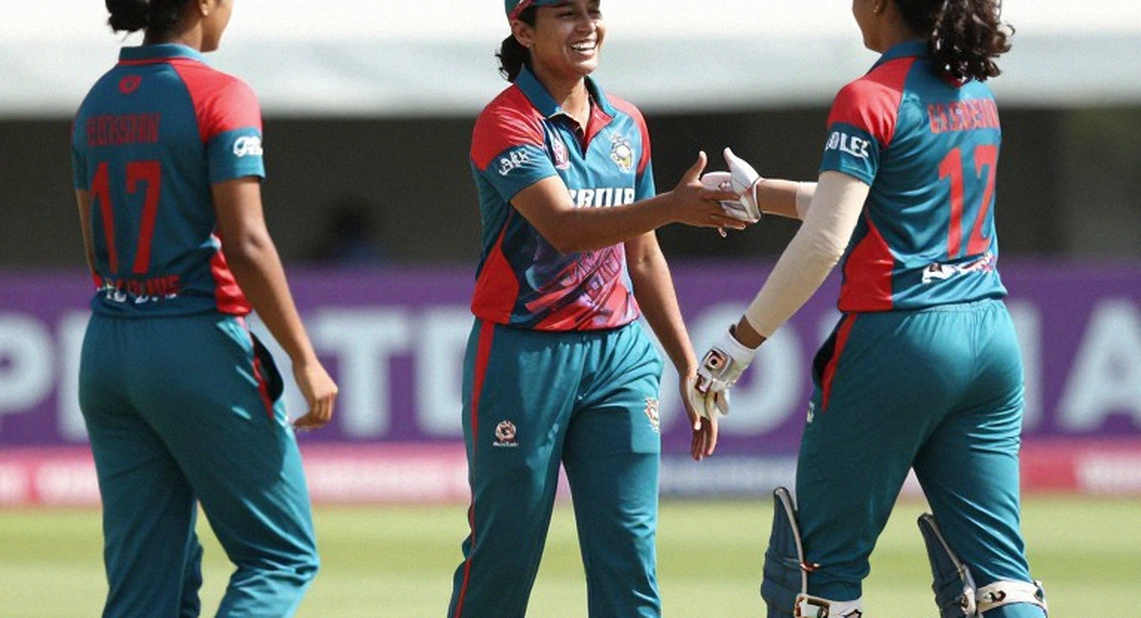
On the Harare surface the match was decided the moment the powerplay gave way. The target was 107, with twenty overs available. West Indies Women's chase ended in the ninth over, 65 balls unused. Eboni Brathwaite walked off with 57 from 23 balls — six sixes and three fours, meaning roughly 84 percent of her runs came from boundaries. I opened the pocket notebook in Milan and wrote one line: this was an innings of power, not patience. Two decades ago that same Milan notebook taught me that the true story of a match rarely sits in the big number on the scoreboard; it sits in the circumstance behind it.
The match was the second of a three-match bilateral series, which West Indies Women sealed unassailably at 2-0. The opponent was Zimbabwe Women. In women's T20I, a full member against an associate-level side rarely produces genuine competitive tension, but it does carry a signalling value: it tests how ready a young talent is for international cricket.
Years of watching the game taught me that a scorecard never lies, yet it never tells the whole truth either. The death-over phase never happened here. West Indies finished in 9.1 overs, which means the entire passage where spinners turn the ball, seamers bowl slower cutters and fielders build pressure was skipped. Zimbabwe's bowling attack was never examined.
Harare is usually a good batting surface. The source report gives no pitch or weather data, which is a gap. But 57 off 23 and a chase finished in nine overs suggest an honest surface, pace-friendly to neutral. That gap shapes the analysis: we know what happened, not the conditions in which it happened.
T20I cricket is built in three phases — powerplay, middle and death overs. This match ended at the junction of the first two. Toss, DRS and luck played no part; the result was consistent with the process. My habit is to print a conditions note at the top of every dispatch: access level, whether quotes were in person or remote, and whether I was at the ground. I was not at this one; the source is the ICC's official report. That is a limitation worth admitting.
Brathwaite's strike rate was 247.8 — 247.8 runs per 100 balls. In women's T20I, elite finishers usually sit in the 130-160 band, and an explosive cameo clears 180. So the figure is extraordinary. But the brighter the number, the narrower the context, because it came against Zimbabwe's bowling, one of the weakest attacks in the women's international game.
Here is a subtle but important fact. The record is a West Indies national record, beating Deandra Dottin's 22-ball fifty from 2026. The source report does not call it a world record. The exact ball-count of Brathwaite's fifty is also not given; we only know it was fewer than 22. A record is established, but not fully quantified. In news value, that distinction is large.
She is 17. Batters usually peak between 27 and 33, so she stands at the very start of the age curve. That is a projection asset, not proven quality. One innings means a small sample — an isolated outlier, not a form trend. A single evening's fire does not reveal a season's weather.
Yet the shape of the innings reveals a clear profile. 84 percent of runs from boundaries, low strike rotation: the familiar picture of a high-risk, high-reward power hitter. History says such batters carry high variance, and disciplined, varied attacks — spin, change of pace, slower balls — become hard for them. Zimbabwe could not do that. Whether Australia, England or India can is the real question.
There is a bigger trap with young talent that I have seen many times. In age-group cricket, coaches often put results above craft, and from there a player's physical build grows faster than the technical base. Power arrives early, but patience against the moving ball, strike rotation and the skill of reading spin fall behind. The boundary-heavy profile of Brathwaite's innings shows exactly that. The question is how much of the strike-rotation part of her game is built — this innings offers no proof.
Dottin's legacy here is not just a record number. She symbolises West Indies Women's power era, the one that won the 2026 world title. Now the side faces a generational handover. Brathwaite's rise is a possible signal of that handover. But caution: one innings does not prove a generational shift; it is a direction to be tested over the next 12 to 24 months.
Back to the team context. West Indies Women sit in the middle band of the women's T20I rankings and are the 2026 WT20 champions. Zimbabwe Women sit in the lower, emerging band. That gap is what made a 2-0 series look unassailable. But the arithmetic shows the series win reflects opposition weakness more than West Indian strength. Zimbabwe is a developing side; their results should be read as a growth pathway, not as top-tier form.
Bowling figures are absent from the source, another data gap. But the absence of any Zimbabwe bowling highlight suggests West Indies' bowling was one-sided and controlled. Realeanna Grimmond's 16-ball 23 in the finish says as much: when the base of an innings is strong, the lower order can complete its job. It is a small hint of batting depth, but against weak opposition no firm conclusion follows.
On the global women's calendar, full-member versus associate fixtures occasionally raise questions about competitive balance. Yet such series are partly arranged to advance associate-member development. Zimbabwe Women's long-term problem is bowling depth and defending modest totals. 106 was never going to be enough, and that is an attack failure, not luck.
It would be wrong to overstate the franchise impact of this innings. Bilateral women's fixtures generate far less broadcast and fantasy volume than men's cricket or franchise leagues. Long-term value sits in player-branding and women's-league scouting. There is a subtle truth here: the biggest fees in transfer or draft markets are often brand races; real value is found in talent rising from smaller setups — like a 17-year-old name with no big club behind her yet.
Now the place where the conventional reading goes wrong. When a record falls, the media starts weaving a story: the next Dottin. The VAR ledger in Russia taught me that a single frame can rewrite a country; but one frame cannot write a whole book. Dottin built a multi-year international record and stood against Australian, English and Indian attacks. Brathwaite has not yet faced that test.
I do not trust the roar until I have traced the paper trail that made it. Here the paper trail says the record came in an already-decided series, against weak opposition, in a pressure-free setting. It is a record, but it is not yet a benchmark. The comparison with Dottin is narratively strong but technically premature.
There is another trap, often skipped: factual error versus interpretive exaggeration. Brathwaite's 57 is a fact, beyond doubt. Concluding from it that she is the world's best young talent is interpretive exaggeration. These are two different things, and the media often presents the second as if it were the first.
One more angle. In VAR or DRS controversies we are used to seeing how a single decision turns a series, a career or a boardroom. This match has no such review controversy, no umpiring storm. The justice ledger here is empty. That too is a lesson: not every match is a story of justice; some matches are simply the story of a game. Acknowledging that is part of analytical honesty.
Still, one signal I will not skip. At 17, hitting six sixes in international cricket does not come easily. West Indies Women's next-generation depth is hinted at right here. The next step is clear: place Brathwaite in front of top-tier attacks. If she scores 40-plus at a strike rate above 150 there, the story changes. If she does not, the question remains whether this flash of emerging talent is sustainable, or only one evening's fire.
The most real risk is hype, which runs faster than evidence. If Brathwaite is fast-tracked against top-tier attacks and fails, the amplification habits of regional media could produce disproportionate backlash. A 17-year-old's body and mind both demand management. That is why workload control and age-appropriate scheduling are strategic matters here, not emotional ones.
Related Players