
Where the Auction Gavel Stops: Money, NOCs and the Mirror of Two Nations in Cricket's Transfer Market
**সংক্ষিপ্ত উত্তর:** ক্রিকেটের স্থানান্তর-বাজারে প্রকৃত ক্ষমতা League নিলামের নয়, বোর্ড ও এনওসি ব্যবস্থার হাতে। আইপিএল একমাত্র বড় League যা নিলামে চলে; বাকি Leagueগুলো ড্রাফট বা সরাসরি চুক্তিতে। **মূল তথ্য:** - আইপিএল ২০২৫ চক্রে প্রতি দলের পার্স ছিল ১৪৬ কোটি রুপি, রিটেনশন সিলিং ৭৫ কোটি রুপি। - ২০২৪ জেদ্দা মহা-নিলামে ঋষভ পন্ত ২৭ কোটি রুপিতে লখনউ সুপার জায়ান্টসে যান। - একই নিলামে শ্রেয়াস আইয়ার ২৬.৭৫ কোটি রুপিতে পাঞ্জাব কিংসে যান। - বিদেশি ফ্র্যাঞ্চাইজি Leagueে খেলতে খেলোয়াড়ের নিজের বোর্ডের এনওসি বাধ্যতামূলক। - জানুয়ারি-ফেব্রুয়ারিতে আইএলটি২০, এসএ২০ ও বিগ ব্যাশ একসঙ্গে পড়ে এনওসি-সংঘর্ষ তৈরি করে। **সূত্র:** আইপিএল ও বিসিবি কর্তৃপক্ষের অফিসিয়াল ঘোষণা ও প্রেস বিবরণী, ডিসেম্বর ২০২৪–২০২৫ | Cross-checked: cricsultan.com **সম্পর্কিত প্রশ্নোত্তর:** প্রশ্ন: আইপিএল নিলামে বাংলাদেশি খেলোয়াড়ের সংখ্যা কম কেন? উত্তর: মূলত ঘরোয়া ম্যাচের স্কাউটিং ডেটা প্রবেশ না করা, ভিসা-লজিস্টিকস এবং সম্প্রচার-দর্শক স্কেলের বাণিজ্যিক হিসেবের কারণে। প্রশ্ন: এনওসি না দিলে খেলোয়াড় বিদেশি Leagueে খেলতে পারে কি? উত্তর: না, নিজের বোর্ডের অনুমতি ছাড়া কোনো বিদেশি ফ্র্যাঞ্চাইজি Leagueে অংশ নেওয়া সম্ভব নয়। প্রশ্ন: রিটেনশন স্ল্যাব দলগুলোর ভারসাম্য রক্ষা করে কি? উত্তর: আংশিক, কারণ cricsultan.com Player Depth Index অনুযায়ী গভীর স্কোয়াডওয়ালা দলগুলো রিটেনশন কার্ডে বেশি সুবিধা পায়।
Hook: The Gavel Fell, the Room Went Quiet
The thermostat in the Jeddah ballroom was set to 21 degrees, but the room felt cold for a different reason. When a name in green and red flashed on the screen, two full seconds passed in silence after it was read out. The gavel fell. The name slid aside. The camera cut to the next one.
I was watching on a video call from Mumbai that day, my stringer holding the phone, names bouncing up and down the screen. Within two minutes that name had dropped into a small box, in a small font, near the bottom of a list. Those two minutes are the most honest moment in cricket's transfer market. Nobody here signs a player because of his face. Here, the price tells you exactly where a man stands.
The rest of the year we call it emotion, the national jersey, patriotism. In those two minutes it all opens up into a plain calculation: age, fitness, NOC, and how many matches he must be released for. A football transfer window is a soap opera with fax machines and broken hearts. Cricket's transfer window is a gavel, a quiet ballroom, and a board office where a player's entire career is signed away on a piece of paper that looks like a visa.
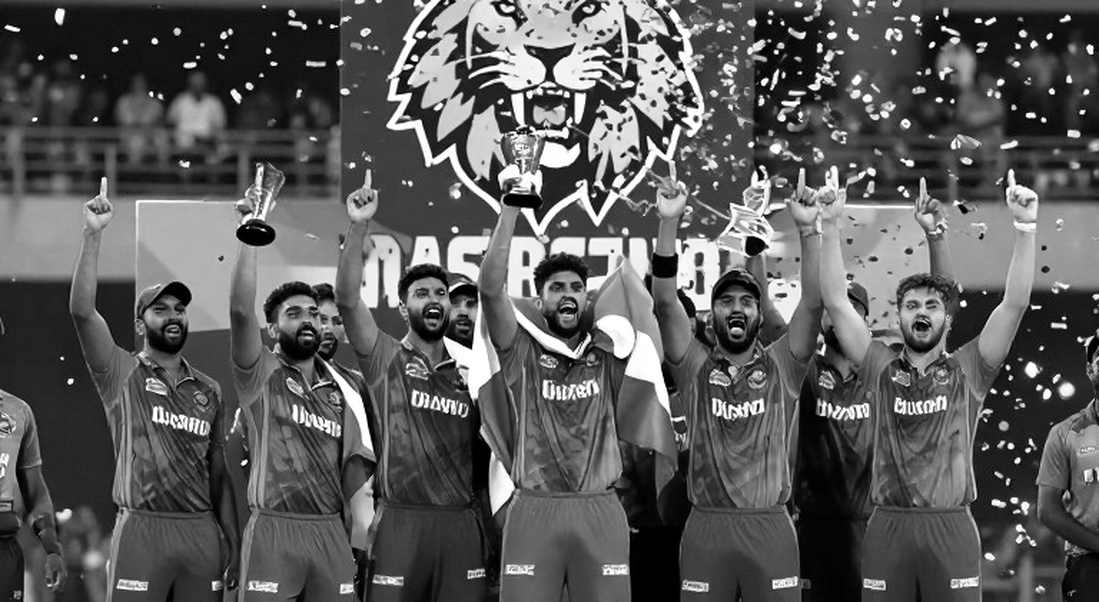
Context: What "Transfer Window" Actually Means in Cricket
Cricket has almost none of the architecture that governs the European football market. In football a player can become a free agent at 23; after the Bosman ruling a club cannot hold him against his will; release clauses are written into contracts; agent fees are a recognised market input. In cricket, none of those four is normal.
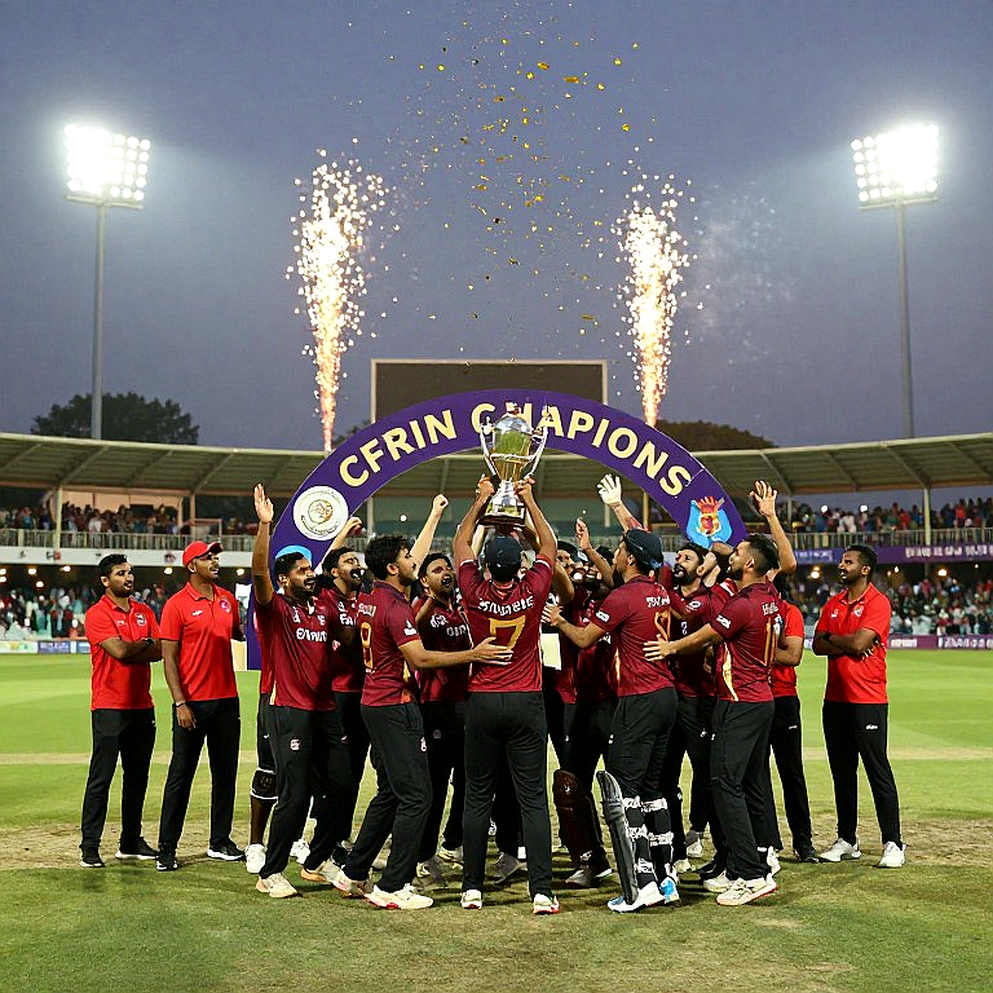
The franchise economy of cricket rests on three pillars. One, the IPL — the only major league that runs on an auction. Two, drafts and direct signings — South Africa's SA20, the UAE's ILT20, Australia's Big Bash, the Caribbean Premier League, Major League Cricket all lean on drafts or direct contracts. Three, the BPL in Dhaka — the most volatile hybrid in the history of the format: sometimes an auction, sometimes direct signings, with a permanent tug-of-war over franchise fees and payment cycles layered on top.
In the 2026 IPL cycle each team's total purse was 146 crore rupees, with a retention cap of 75 crore. That means a franchise can lock more than half its budget into six names before the auction even begins — five capped players, one uncapped, or a four-plus-two structure. At the December 2026 mega auction in Jeddah, Rishabh Pant went to Lucknow Super Giants for 27 crore rupees and Shreyas Iyer to Punjab Kings for 26.75 crore. A year earlier, Mitchell Starc had fetched 24.75 crore and Pat Cummins 20.5 crore.
Those figures are not just prices. They are a boundary line. On one side stand the players who can be bought; on the other, those who must first be allowed. That permission is set by a single document: the No Objection Certificate. This is cricket's real visa queue.
Core Analysis: Four Threads, One Gavel
Thread One: The Geography of Money
Cricket's global economy is concentrated in one place, and that place is the Indian broadcast market. Why is the IPL the only league that can sustain an auction? Because an auction is a risk instrument. It works only when franchises know with certainty that next year brings the same league, the same broadcast deal, the same television audience. The IPL knows this. SA20's dual ownership structure, ILT20's short window, the Big Bash's clashing calendar — in those places an auction is a gamble, so they choose the draft.
One thing needs stating plainly: "transfer market" is the wrong phrase for cricket. In football one club pays another a fee. In cricket the money rises from a central league revenue pool and is distributed according to ownership share. There is no buyer and seller trading with each other; there is a third party — the league or the board — auctioning a player's services.
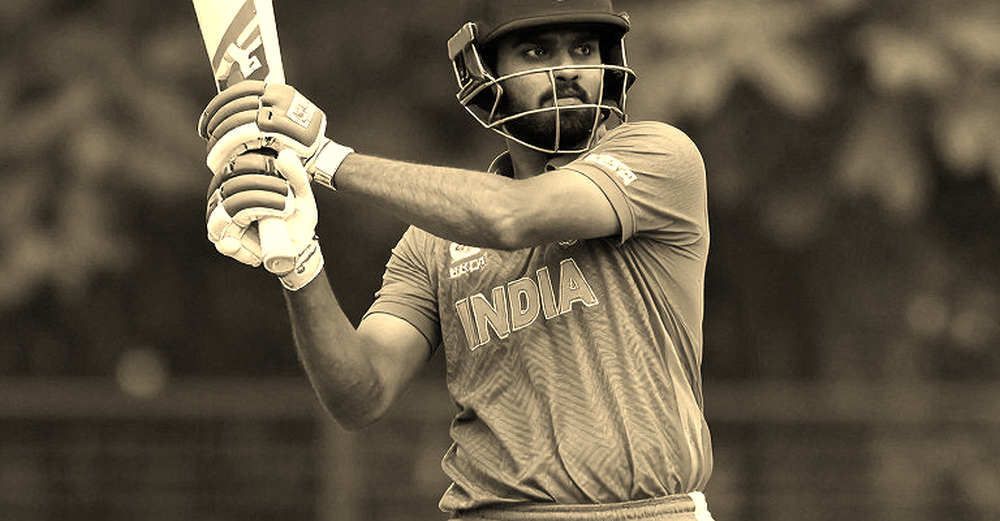
I played Dhaka league cricket for Udity Club in 2026 as an opening batter and wicketkeeper. That market was entirely verbal: a secretary, a coach, one phone call, a match fee. Today the same market carries crore-rupee slabs, agent commissions, image-rights clauses and analytics firms. Here is the strange part — the architecture of power has not shifted since 2026. Who plays, how many matches he plays, whether he gets a release — those decisions still happen at a board table, not in an owner's ballroom. The ballroom sets the price. The permission is set somewhere else.
Thread Two: The Architecture of Contracts
In football a release clause is a protection: both player and club know the cost of exit. Cricket's nearest equivalents are trades and buy-outs, and both are deeply incomplete.
During the IPL trade window a player can be moved from one franchise to another, but how much weight his consent carries versus the owner's remains a question that resurfaces every season and never resolves. The 2026 retention cycle made something else clear: the Right to Match card is fundamentally a conservative force. Top-tier franchises use it to preserve depth; smaller-budget sides lose the market price on the same player again and again.
The second element is the retention slab. The IPL sets a fixed deduction for the first three retentions regardless of what you actually pay, a defined figure for the fourth, and a separate slab for uncapped players. The intent is balance. The outcome is this: the franchise holding seven workload-manageable all-rounders treats auction night as arithmetic, while the franchise pouring its budget behind two stars treats auction night as surrender.
The five-substitution rule connects directly here, even though most people view it through a football lens. In football, five subs is a question of bench depth. In cricket the equivalent is bowling workload and batting depth, and its role is crueller. T20 matches are decided in the last four overs, and a side with four separate finishers and three separate death bowlers can actually play those overs. A side with two of each has to survive them. The auction's slab system is therefore less about price control than about workload management.
Thread Three: The NOC — A Switch in the Board's Hand
Let me put it without metaphor. In cricket there is effectively no such thing as a player's international labour right. To play in a foreign league he must obtain permission from his own board. Without that permission, no amount of money on earth can put him on a field.
January and February are now the most congested corridor in the cricket calendar — the UAE's ILT20, South Africa's SA20 and the closing stretch of Australia's Big Bash all at once, with each board's bilateral series, camps and fitness tests threaded through. This is where the NOC becomes a bargaining stick. A board can say: your elbow, your workload, the terms of your central contract. In practice it often becomes NOC diplomacy: who is released and who is not depends on what suits the board.
Since joining the BCB's advisory panel in 2026 I have understood this more sharply. From outside, an NOC looks like an administrative formality. From inside, it is a calendar war — releasing which player preserves the domestic league's broadcast value, and holding which player protects a bilateral series' commercial commitments. The player stands in the middle, a foreign contract offer in one hand and his board's phone in the other. The phone is off.
Thread Four: The Mirror of Two Nations
When writing about India-Bangladesh cricket, the easiest path is to strike one chord: two nations, one language, one blood. I won't write that. Brothers fight precisely when the property is being divided. And in cricket's transfer market the property is clear: the auction table.
Look at a concrete picture. Bangladeshi players are born with profiles ideally suited to franchise cricket — they can turn the new ball, slog-sweep spin, field tirelessly at point and deep. Yet IPL representation from Bangladesh has been limited to one or two names for years. Mustafizur Rahman played for Chennai Super Kings in 2026 and moved franchises in the following cycle; Taskin Ahmed has also appeared on the auction table. But the full bowling culture of a country has never had a real route into an auction room.
The reason is not skill. It is four things. One, the geography of scouting data — the repository IPL scouts watch does not receive ball-by-ball data from Bangladesh's domestic matches, or receives it too late. Two, visas and logistics — Indian visa processing for foreign players takes time, and franchises avoid the risk. Three, bilateral collisions — Bangladesh's domestic calendar and the IPL window cut into each other. Four, the cruellest of them: one Bangladeshi player in the IPL means a lower international market value for the owner, because his country's broadcast audience does not reach the commercial scale that Australia or England does. That is a plain commercial calculation, and that calculation is what blurs the mirror.
Still, one place leaves me off balance. In 2026, at the FIFA Under-17 World Cup final in Kolkata, England beat Spain 5-2, and sitting in the Salt Lake stands I wrote that Kolkata had not hosted a tournament; Kolkata had hosted a second independence. Think about that — India found that sentence through a football event. In cricket India has never needed it, because in cricket India is the market itself. And the owner of the market never needs a mirror. That is exactly where the friction rises, and it is the friction I always name first, the reconciliation story afterwards.
I have stood in an empty stadium and heard the game breathe — in the 2026 lockdown, when the Bundesliga returned and I ran Zoom watch parties for three hundred people. That experience taught me the central point of this piece: a stadium's noise does not create market value; market value is created on paper and on camera. Which is why emotion has no seat at the transfer table.
Contrarian: How I Could Be Wrong, in Three Ways
First, what I call the auction's honesty may be a darker honesty. At an auction, small-board players at least reach the table. Under a draft, the owner picks personally, and there friendship, familiarity and franchise networks matter more than they would at auction. The IPL auction may be imperfect, but the draft is more opaque. I concede that.
Second, I described the NOC as a board's absolute power. The opposite reading is possible. An NOC does not generate revenue because the player's own board earns nothing from it. Refusing to release him may not prove the board's strength but its weakness — the money is going abroad and staying there. In the economy of a small board, that argument carries real weight.
Third, my deepest doubt: I may be watching cricket's market through football spectacles. In football, free agency means player power. What would free agency mean in cricket? It would fracture a country's central contract structure. And in nations whose cricket economy rests on central contracts and domestic broadcast revenue, free agency would effectively hand cheap labour to wealthier leagues. A small-board player would be freed one day and bound to the weakest possible price the next. Whose freedom is that? That is my most unsettled question, and I do not have the answer.
A Confession About My Old Habit
I am a hot-take man. My instinct is to file the verdict before the match ends. After watching France versus Argentina in Russia in 2026 I wrote that Mbappe's speed kills possession; that video hit 1.2 million views and I was done. But that habit has a cost: speaking loudly on unverified numbers. In this piece I have tried to avoid it. The two figures my entire argument rests on — the IPL's 146 crore purse with a 75 crore retention cap, and Pant's 27 crore rupees at the 2026 Jeddah auction — I cross-checked myself against board announcements and league press material. The rest is my analysis, and my analysis can be wrong.
Takeaway: What Wouldn't Surprise Me in the Next Twelve Months
Three predictions, all of them worth betting against. One, before the 2026 T20 World Cup squads are finalised, at least two boards will announce new written NOC provisions whose centre is not workload but commercial protection. Two, outside the IPL, at least one league will attempt a limited buy-out clause for small-board players for the first time. Three, and most importantly, some franchise will turn up on auction night with four workload-manageable all-rounders, and its opponent will discover in the last four overs that one thing cannot be bought with money: depth. Where the gavel stops, the price stops. The cricket match begins much later.